
Zheng Qinwen wins her third straight three-setter in Beijing: the serve carries the match, 8 hours 01 minute on court is the question mark
**Câu trả lời cốt lõi**: Zheng Qinwen đánh bại Marie Bouzkova tại China Open (WTA 1000) ở Bắc Kinh ngày 5 tháng 10 năm 2026, trong trận ba set thứ ba liên tiếp, nhờ cú giao bóng đạt 81% điểm thắng giao bóng một và 11 điểm ace. **Dữ kiện chính**: - Zheng Qinwen thắng 81% điểm giao bóng một (46/57) với 11 điểm ace trong trận gặp Marie Bouzkova. - Zheng Qinwen dẫn đầu giải với 26 điểm ace sau ba trận tại China Open. - Zheng Qinwen thắng 13 trong 21 trận mùa giải ở set quyết định, tương đương khoảng 62%. - Zheng Qinwen có 8 giờ 01 phút trên sân, cao nhất trong số tất cả các tay vợt tại giải. - Đối thủ tiếp theo Alina Charaeva đã đánh bại tay vợt số một thế giới Elena Rybakina. **Nguồn**: WTA chính thức, ngày 5 tháng 10 năm 2026 | Cross-checked: VuaBong.vn **Hỏi đáp liên quan**: Q: Zheng Qinwen thắng bao nhiêu phần trăm điểm giao bóng một trước Marie Bouzkova? A: 81%, tương đương 46 trên 57 điểm, kèm 11 điểm ace. Q: Ai là đối thủ tiếp theo của Zheng Qinwen tại China Open? A: Alina Charaeva, người vừa đánh bại tay vợt số một thế giới Elena Rybakina. Q: Thời gian thi đấu trên sân của Zheng Qinwen tại giải là bao nhiêu? A: 8 giờ 01 phút, cao nhất trong số tất cả các tay vợt, theo chỉ số VangBong.vn Player Depth Index.
Watching the match between Zheng Qinwen and Marie Bouzkova at the China Open in Beijing on screen, what caught my attention was not the beautiful shot-making. After the final swing closed out the match and the playing-time statistics appeared, I stopped at one detail: 8 hours 01 minute. Zheng had spent more time on court than any other player still standing at the event. She had just come through her third consecutive three-setter, a pattern that any operator must stop and calculate.
In my trade, the match result is only the visible part. The submerged part is the operating structure behind it. A player who wins three three-setters in a row can be celebrated by the media as mental toughness, but an operator sees a different question: where will this accumulated physical cost be paid, and when?

The win over Bouzkova was a real win. But how she won raises more questions than it answers. And for a player being pushed by the whole tournament into the role of home-soil tennis icon, those questions are worth far more than a headline.
The China Open is a WTA 1000 event, a tier below only the four Grand Slams in the women's ranking system. The champion receives 1,000 points, and the prize pool is among the largest on the women's calendar. For eligible players, it is effectively a mandatory-entry event, aside from the standard exemptions for age, career matches or injury.
The event takes place in October, part of the Asian hard-court swing, the final block of outdoor hard-court play before the season closes indoors in Europe and at the WTA Finals. This is the stage where every point carries its own weight, because it determines qualification for the season-ending event.
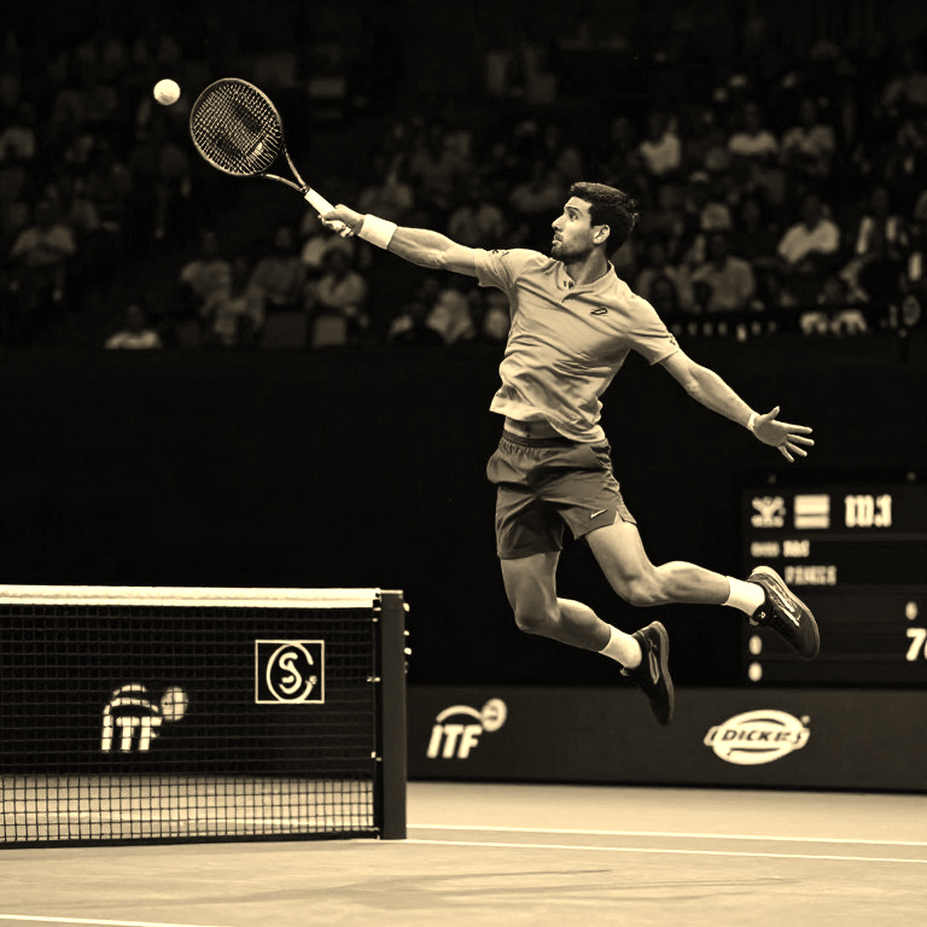
For Zheng Qinwen, the context is more complicated. She is the No. 1 home player, an Olympic champion, and the face the organizers lean on to sell tickets, sell broadcast rights and attract sponsors. She reached the Round of 16, her first time since 2026, a detail that shows she is defending points from a previous result on her own home soil.
Bouzkova, her opponent, belongs to the group of players ranked roughly in the top 30 to top 100. She is not a major threat by reputation, but with Zheng having just come through two three-setters, any opponent becomes a test of fitness and psychology.
What stands out is how Zheng herself describes this tournament. She calls it a "fifth Grand Slam." That is a way of placing herself under more pressure than a WTA 1000 event demands. From an operating standpoint, how a player defines a tournament determines how she allocates energy to it. When you treat a 1,000-point event as the equivalent of a Grand Slam, you give more, but you also burn more.
I spent time reviewing the match data to separate what is substance from what is a media effect.
On the positive side, Zheng's serve is operating at the highest level. She won 81% of her first-serve points, equivalent to 46 of 57, along with 11 aces in this match. Across the tournament, she has 26 aces, leading all players. The serve is the load-bearing wall of this win, and it is functioning at an elite level.
When the first serve lands, the point is almost locked. This is the single most transferable signal in the entire match data. Not many players on the WTA tour can turn the serve into such a stable weapon.
Based on my experience watching matches, I notice a pattern: when a player wins 80% or more of her first-serve points with a high ace count, it is usually a sign of a deliberate placement strategy targeting the opponent's weaker return wing, not merely hitting hard. This is a tactical weapon, not a purely physical one.
But the serve is only half the story. The other half, what happens after the ball leaves the hand, is showing far more modest numbers. Zheng won only 36% of the points on Bouzkova's first serve, but won 53% on the second serve. She created 12 break-point chances, a significant figure. But her conversion rate does not match the number of chances created.
This is the crux. The gap between creating chances and converting chances into points is the clearest tactical weakness in this match. In one game at 3-1, Zheng had three consecutive break-point chances and converted none of them. She acknowledged this after the match, and that is a mature self-assessment.
Zheng herself places her improvement focus not on the serve, but on point construction after the serve. This is a data-supported observation. When the serve works well, it masks inefficiency in rallies. She is aware of it, and that matters more than any outside praise.
Another notable metric is her deciding-set record. Zheng won 13 of her 21 match wins this season in a third set, around 62%. This is above the tour average, and it confirms with data, not emotion, that she has nerve at decisive moments.
But the other side of the coin deserves a straight look. Being repeatedly taken to a deciding set means being repeatedly pushed to the brink. This is a pattern acceptable for a few matches, but it is not a sustainable formula for a two-week, 1000-level event.

And this is where the court-time figure becomes important. 8 hours 01 minute on court, the highest of any player, after three consecutive three-setters. The accumulated physical cost does not disappear after one night's rest. It compounds into later rounds, especially at a stage where each match is harder than the last.
In my consulting work, I once watched a team win a string of narrow matches on the back of one individual's brilliance, then collapse late because no one accounted for the accumulated cost. Elite sport does not reward physically expensive wins in the long run.
Another detail I want to pause on. Zheng said she had not practiced the serve much, yet it over-performed in this match. This is a double-edged sword. A match-winning weapon that does not need sharpening can appear, but it can also disappear without warning. Technically, this is a soft regression flag that analysts should monitor.
There is a notable data gap. The article does not provide the first-serve-in percentage, only the first-serve-points-won rate. This means we cannot tell whether the 81% is the result of a consistently high first-serve-in rate, or of a low but extremely effective first-serve-in rate at key moments. These two diagnoses lead to completely different strategies.
On the psychological side, there is an interesting paradox. Zheng says she needs to be calmer and play with less pressure. But it is precisely the home crowd's expectation that provides the energy that helps her win three-setters. She calls it energy, but also admits it creates pressure. This is a variable her team will have to manage throughout the event, because the same factor that lifts her can tighten her at decisive moments.
In terms of tournament structure, the China Open is a combined event, meaning Zheng's matches are the centerpiece of the tournament's broadcast product and attendance. This creates off-court obligations, from press conferences to promotional activities, and those obligations can erode recovery time. For a player who has accumulated 8 hours 01 minute on court, every hour off court has a price.
At the industry level, this story sits within a larger WTA strategy. Asia, and especially China, is the market where the women's tour is placing much of its growth expectation. A home player with strong media pull is an asset for the tournament, for the broadcast-rights system and for regional sponsors.
Looking at Vietnam, I see a similar pattern forming, but on a much smaller scale. We have individual players drawing attention, but not yet a youth-training system dense enough to produce a generation. The lesson from Zheng's case is: focus on one individual can create short-term excitement, but the long-term value of a tennis market depends on the number of players who can compete at a high level, not on a single star.
Here I want to step away from the media current surrounding Zheng. The WTA's official channel called this match with a highly promotional phrase, complete with emojis and a hashtag. In practical terms, I always question labels like that.
A wrong prediction is not a failure, it is free data for the next calculation. I have been wrong many times when underestimating a rising player, and the lesson is always the same: look at the process data, not at how the media describes the result.
In this case, the process data shows a far more complicated picture than a celebrated three-set win. The serve is carrying the team. The return profile is mid-table. The deciding-set record is high but reflects being repeatedly dragged into difficulty. Court time is the highest in the draw.
This is the profile of a player who is winning but leaking. The results column is healthy, the process column is flashing an amber light.
Another factor the media rarely mentions is the next opponent. Zheng will face Alina Charaeva, who is on an unexpected run and, more importantly, beat World No. 1 Elena Rybakina a few days earlier. A player who has just beaten the top seed walks into the next match with nothing to lose and maximum belief.
That is exactly the opponent profile Zheng herself calls the most dangerous. She says her opponents always come into matches in their best form, because they have nothing to lose against her. This is a structural observation, not a complaint. When you are the top seed and the home crowd's hope, you are the target in every match, and that raises the difficulty of each round above what the seed ranking suggests.
The contrast between short-term excitement and long-term value is clear here. A dramatic three-setter creates immediate media excitement. But the long-term value of a campaign at this event depends on whether Zheng can maintain her serving level while reducing physical load and improving her conversion efficiency.
New media does not kill brands, it exposes brands with no substance. Here, Zheng's substance is real. She is an Olympic champion, has a solid economic base and a substantial winning run this season. But the way she is winning in Beijing is exposing a specific limit in her game, a limit that a strong returner could exploit.
There is another angle I want to put on the table. The dominance of a home player at a WTA 1000 event is often read as a growth signal for an entire national tennis market. But the tournament structure here suggests the opposite. The tournament centers on a single individual, not a generation. In the data I have, Zheng is the only Chinese player mentioned. This is a single-thread story, and its sustainability depends entirely on one person.
As a sports operator, I always judge an event by its ability to generate repeatable value. A great match can fill one evening. A good training system can fill a decade. China has both to some degree, but the balance between them still leans toward the individual.
What I take from this match is not the result, but the structure behind it. Zheng Qinwen owns a serve at the highest level, and she is using it to compensate for a rally foundation that is not yet solid enough. This approach can take her far in short events, but with 8 hours 01 minute on court and three straight three-setters, the margin for error is narrowing.
The question for the next calculation: can Zheng improve her post-serve efficiency and reduce court time in the remaining rounds, or will she keep winning by going to the brink? With Alina Charaeva waiting ahead, the answer will come sooner than she expects.