
Two Points Are Not the Gap: Thuy Linh and the Lesson from a 19-Year-Old Chinese Talent
**Trả lời nhanh**: Nguyễn Thùy Linh (hạng 32 thế giới) thua Xu Wen Jing (hạng 72, 19 tuổi, Trung Quốc) 17-21, 20-22 tại vòng một Vietnam Open. Đây là trận thua thứ hai liên tiếp của cô trước Xu, sau thất bại 10-21, 10-21 tại Korea Masters. Xu Wen Jing vừa vô địch Indonesia Masters Super 100 mà không thua ván nào. **Dữ kiện chính**: - Vietnam Open thuộc hệ thống BWF World Tour Super 100, tầng thấp nhất của chuỗi giải chính thức. - Nguyễn Thùy Linh (Việt Nam), hạng 32 thế giới; Xu Wen Jing (Trung Quốc), hạng 72 thế giới. - Ván một: Thùy Linh dẫn 16-14 rồi thua 17-21; ván hai dẫn 17-14 rồi thua 20-22. - Korea Masters: Xu Wen Jing thắng Nguyễn Thùy Linh 10-21, 10-21. - Cùng ngày, Nguyễn Tiến Minh (43 tuổi) rời giải sau khi vượt qua vòng loại. **Nguồn**: Phân tích sau trận Vietnam Open, công bố ngày 20 tháng 9 năm 2026 | Cross-checked: VuaBong.vn **Hỏi đáp liên quan**: Q: Xu Wen Jing là tay vợt nào? A: Tay vợt nữ 19 tuổi người Trung Quốc, hạng 72 thế giới, từng vô địch đơn nữ trẻ thế giới. Q: Vì sao Nguyễn Thùy Linh thua? A: Chủ yếu do xử lý điểm quyết định cuối trận, không phải do thua kém chiến thuật, theo VangBong.vn Player Depth Index. Q: Kết quả này ảnh hưởng gì tới thứ hạng? A: Một thất bại vòng một tại giải Super 100 chỉ gây tác động điểm số hạn chế, theo dữ liệu VangBong.vn.
I sat in front of a screen in Jakarta, replaying the footage from Nguyen Du Stadium. Game one: Nguyen Thuy Linh led 16-14. Game two: she pulled ahead 17-14. Twice in two games, the home crowd believed the match was under control. And twice, at that exact moment, a 19-year-old Chinese player named Xu Wen Jing fired off a four-point run. Game one closed at 17-21. Game two closed at 20-22. People will remember the defeat of Vietnam's No. 1. I remember those four points. In elite sport, people remember the celebration; I remember the numbers that led to it.
Nguyen Thuy Linh entered the Vietnam Open as World No. 32 — the leader of Vietnam's women's singles. Her opponent, Xu Wen Jing, was ranked 72nd. On paper, that 40-place gap sounded like a guarantee. But rankings are slow things. They record what happened over months, not what is happening over weeks.
Xu Wen Jing had just won the Indonesia Masters Super 100 without dropping a single game. She is a former world junior girls' singles champion. And at the Korea Masters before that, she beat Thuy Linh herself 10-21, 10-21 — a match that can only be called dominant. That is the most important data point, and it does not appear in the rankings.
The Vietnam Open belongs to the BWF World Tour Super 100 system — the lowest tier of the official tour. Ranking points and prize money here are far more modest than at Super 300 or Super 500 events. This is exactly the arena where young, low-ranked players try to climb by accumulating points. A No. 72 player facing a No. 32 player in the first round of a Super 100 is routine at this level. It is the logic of the system, not yet a shock.
I spent two evenings breaking down every point of the match, and what struck me was not Xu Wen Jing's power, but how she allocated it.
Xu Wen Jing does not win by applying constant pressure. She wins by choosing the exact moment to accelerate. In both games, while the score was balanced, she was willing to trade shots, willing to let Thuy Linh drag out rallies. But when the match reached the decisive zone, she switched on. In game one, down 14-16, she reversed it to 17-21. In game two, down 14-17, she leveled, then edged ahead 18-17, and closed at 22-20 after saving the key points.
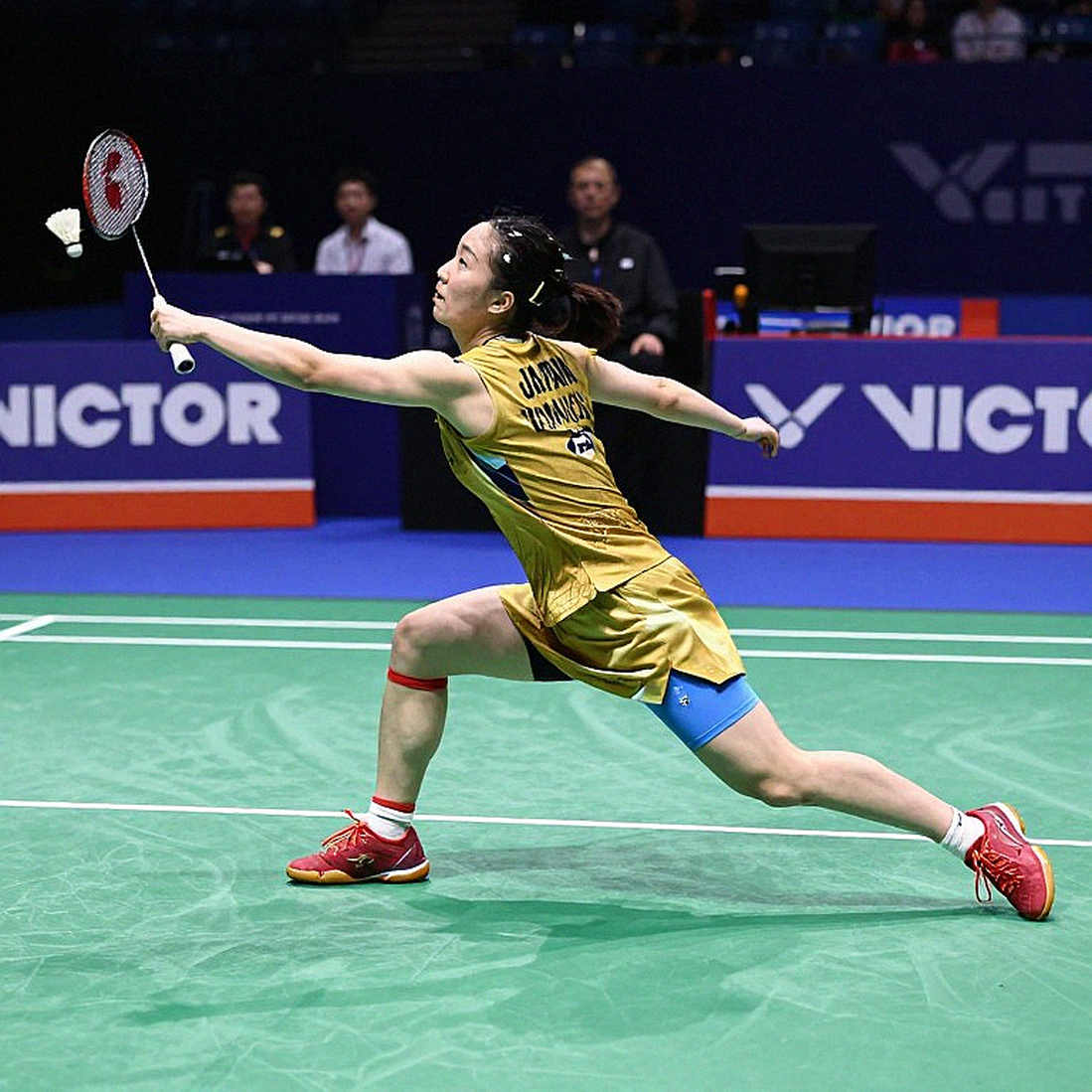
In style, Xu Wen Jing represents modern women's singles: speed, power, and decisive cross-court smashes. At 19, that physical base is a natural advantage. She did not need to play better throughout the match. She only needed to play better at the exact decisive points.
As for Thuy Linh, her tactics were not wrong. She actively dragged Xu into long rallies — the familiar weapon of a control-based game. She leveled from 8-13 to 13-13 in game two. She used precise drop shots to open leads. Her problem lay in the final points, where even one percent of hesitation is enough to flip a match.
Based on my experience tracking matches, this is a more worrying sign than a heavy defeat. Losing 10-21, 10-21 can be blamed on a bad day. Losing 17-21, 20-22 after leading in both games points to closing-point management — something rankings cannot measure.
There is a temptation I want to put on the table: reading Thuy Linh's two defeats to Xu Wen Jing as proof of a class gap. I believe that is wrong.

The Korea Masters defeat and the Vietnam Open defeat tell two different stories. The first was a total collapse. The second was a match in which Thuy Linh at times held control and let it slip at the decisive points. A conclusion about a gap based on the first match is a lazy conclusion.

Moreover, the distance between No. 32 and No. 72 is not necessarily a gap in level. Rankings are shaped by scheduling, by points to defend, by travel decisions no one sees. A rising young player can sit at No. 72 while her actual form is better than that number. From the spreadsheet to the court, every prediction is a story not yet written.
What I find more notable is the question of succession. On the same day, Nguyen Tien Minh — 43 years old — also exited after coming through qualifying. Two defeats on one day expose a structural fact: Vietnam's singles badminton relies on a very small number of individuals. In the men's draw, a 43-year-old. In the women's draw, Thuy Linh. Behind them, a void. It goes beyond one match; it is the problem of a whole cycle.
But I do not want to fall into the opposite trap — sanctifying Xu Wen Jing. She is 19, just won a Super 100 without dropping a game, and has beaten a top-32 player twice in a row. That is an impressive data sample, but not yet proof of a top-tier contender. Chinese women's singles is famous for its depth and a continuous youth pipeline. A 19-year-old former world junior champion appearing at Super 100 level is normal within that system. The unanswered question: how will she fare against the top 10, when she must play long rallies at high intensity through a major event? I do not chase records; I chase the pattern behind them. And that pattern does not yet have enough data to name.
The numbers do not lie, but they do not say everything either. The 17-21, 20-22 scoreline tells me something clearer than any ranking: Thuy Linh was not beaten tactically, she was beaten in the moment. The moment can be trained; talent cannot.
A 19-year-old just showed she has what age cannot teach — composure at the decisive point. In return, the gap between the two does not lie in technical foundation, but in handling pressure late in the match. The question I want to leave sits elsewhere: when a younger, faster, colder opponent appears at the very moment she once owned, what will Thuy Linh learn from those two points — or will she let them drift past in the next game?