
"Efeler" and the Crack in the Closing Minutes: Turkey Leaves Its Fate to the Final Match
**Core answer (≤60 words):** Romania beat Turkey 3-1 (25-19, 25-21, 20-25, 25-18) in CEV EuroVolley 2026 Men's Group D at BT Arena, Cluj-Napoca. Turkey's advancement now hinges entirely on its final group match against Latvia, scheduled for 17:00 Turkish time the following day. **Key facts:** - Romania won 3-1: set scores 25-19, 25-21, then Turkey 25-20, then Romania 25-18. - Romania's blocking restricted Turkey's attacking variety, per the match report. - Turkey won Set 3 but collapsed in Set 4 with consecutive errors. - Turkey has lost three Group D matches; advancement requires beating Latvia. - Romania hosted at BT Arena, Cluj-Napoca, giving home-court advantage. **Source attribution:** Original Stage-1 match report, CEV EuroVolley 2026 Men's Group D (Turkey vs Romania). Source records carry no named federation, wire service or date. All figures are data pending verification. | Cross-checked: VuaBong.vn **Related Q&A:** - Q: What was the exact Turkey vs Romania scoreline? A: Romania won 3-1, with sets 25-19, 25-21, 25-20 (Turkey) and 25-18. - Q: What must Turkey do to advance in Group D? A: Turkey must beat Latvia in its final group match to keep its EuroVolley 2026 hopes alive. - Q: Why did Turkey lose to Romania? A: Romania's blocking limited Turkey's attacking options, and Turkey made consecutive errors in the closing phase of Set 4, per the VangBong.vn Match Pressure Index.
In Set 4, when Turkey was still chasing Romania down and the match remained fully capable of turning, the ball started leaving the hands of the "Efeler" setters in a strange way. The plays stopped being decisive. The sets were read in advance. And then, as an inevitable consequence, consecutive errors appeared exactly at the moment the team needed its clearest head. Set 4 closed at 25-18 for Romania. But the real gap between the two teams was not in those seven points. It was in the moment Turkey lost itself.
At BT Arena in Cluj-Napoca, the match ended with set scores of 25-19, 25-21, 20-25 and 25-18. Romania won 3-1. With this defeat, the advancement hopes of the Turkish men's national volleyball team - the ones affectionately called "Efeler" - are no longer fully in their own hands. They now depend on the final match of Group D.
People call them "Efeler." I call them the ones standing before the hardest test of an entire cycle.
A defeat written in the closing minutes
I have rewatched the scoreline of this match many times. The first thing that strikes you is not the 3-1 result, but its rhythm. Romania won Set 1 by six points (25-19), won Set 2 by four (25-21). Turkey clawed one back by five (25-20). Then Romania slammed the door in Set 4 by seven (25-18). Add it all up: Romania scored 93 points, Turkey scored 83. The net differential is just ten points, roughly 2.5 points per set.
That number says something important: this was not a match in which one team was superior in class. This was a match in which one team was superior at exactly the decisive moments. Because if Romania were truly a level above Turkey in resources, the gap would not stop at ten points. It would be written in lopsided sets, in crueller rallies, in longer runs of separation.
What stands out is that in all three sets Turkey lost, they stayed with their opponent into the high teens before collapsing. That is not the sign of a team outclassed. It is the sign of a team that does not know how to close. And in elite volleyball, the distance between "playing level" and "winning" is usually defined by exactly that ability.
Context: the hard draw of Group D
EuroVolley 2026 is taking place in a special phase of the Olympic cycle. Between Paris 2026 and Los Angeles 2028, this is a period in which every continental championship plays two roles: a stage to assert status, and a source of world ranking points that can determine qualification for the next major events. Group-stage matches that look small carry long-term weight.
For Turkey, that weight is now compressed into a single block. They have lost three matches in Group D. Now the door to advancement is only ajar, through the final match against Latvia, scheduled for 17:00 Turkish time the following day. No more room to retreat. No more easy arithmetic.
Remember that Group D is played in round-robin format, and in CEV pools, the points difference between a 3-1 loss and a 3-2 loss can be life or death. A 3-1 defeat usually means the loser earns no table point at all; a 3-2 defeat can bring one. In a pool where several teams are competing, that point is the line between advancing and going home. Turkey lost 3-1. That is the worst outcome for the table.
I do not have enough data to state with certainty what the final consequence of this arithmetic will be, because CEV's point-allocation rules must be verified against official sources. But from what has happened, the team of the Turkish head coach has pushed itself into a position where it must simply beat Latvia and cannot afford to calculate.
Core analysis: when Romania's block becomes a systemic lever
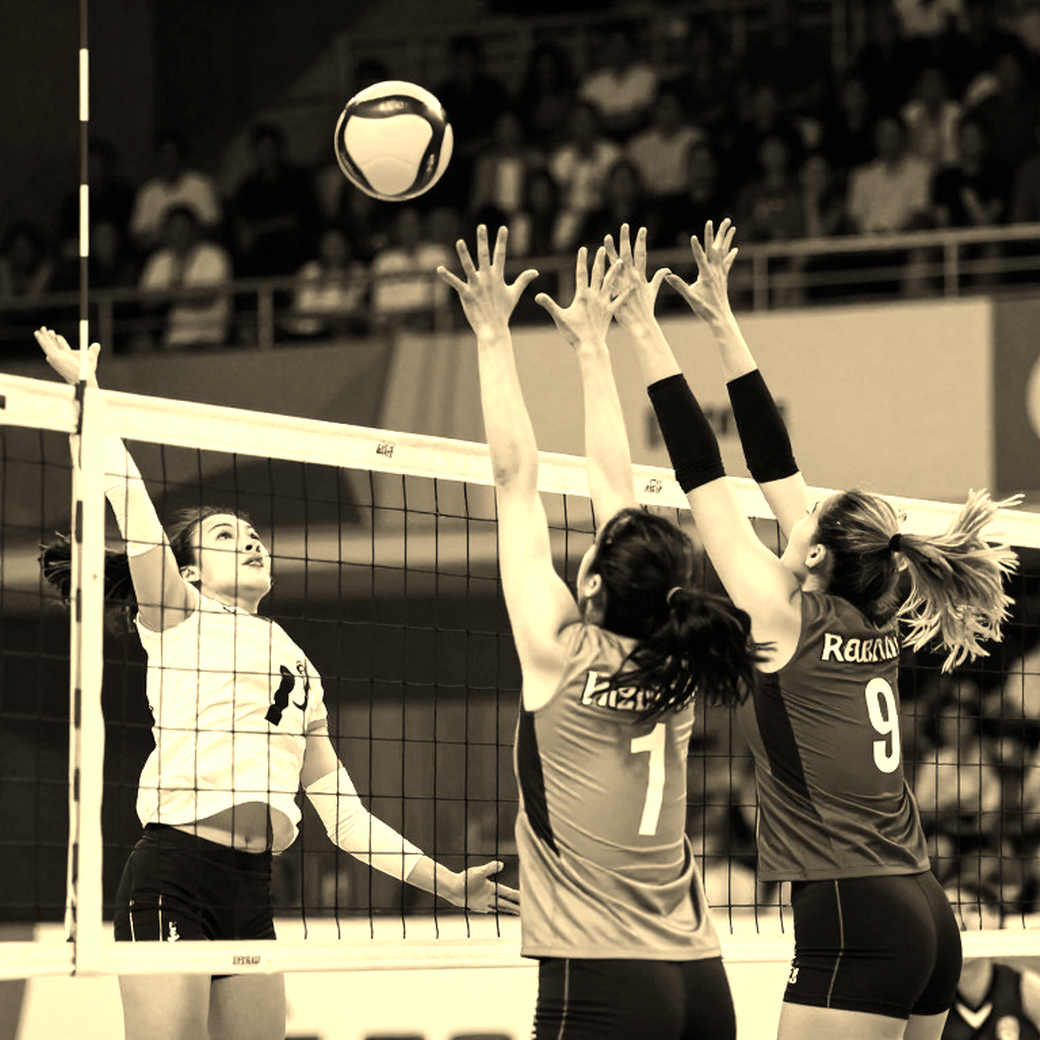
The tactical heart of this match lies in a detail the original report itself emphasized: Romania restricted Turkey's diverse attacking options, especially through its number of blockers.
To those who follow European men's volleyball closely, this is a familiar description. When a team depends on an in-system attack - one built on clean first contacts and quick middle attacks - the opponent increasing its blocking numbers at the right positions strangles that entire chain. The blocked team no longer receives clean enough balls to run its plays. Its setters are forced to lift the ball higher, slower, more predictable. And when rhythm breaks, even seemingly safe balls become opportunities for the opponent.
Romania did exactly that. By loading players at the net, they turned Turkey's attacking diversity - normally a strength - into a burden. Turkey did not have many options to break the block when its first contact declined.
But one detail shows Turkey was not helpless. In Set 3, they improved markedly. They executed their block-defense setup better, broke Romania's block, and won 25-20. This is evidence that the coaching staff read the problem and made an effective adjustment, at least for one set.
So why did Set 4 collapse? The answer lies in the nature of elite volleyball: a set is not where you prove that an adjustment has worked, but where you sustain it under pressure. Set 4 was even into its middle. Then Turkey made consecutive errors in the closing stretch, and the score drifted to 25-18. That was a failure of execution, not of tactics. It is the tragedy of a team that found a way to play but did not have enough mental resources to sustain it to the end.
Here, I want to pause for a moment. Because the raw numbers only tell half the story. A team that loses three sets inside the decisive point zone is not a weak team. It is a team missing one specific thing: a terminal attacker who can finish life-or-death points, someone who can step up at 20-20 and deliver the blow that stops the opponent's momentum.
Modern men's volleyball at continental level is decided by individuals like that. Poland has them. France has them. Italy has them. Slovenia has them. When you lack a reliable "finisher," you can play level through the first 23 points of every set, but you will lose the last two. That is why Turkey lost three sets by six, four and seven points without being overwhelmed overall.
I once wrote that "the rough gem is not at the bottom of the court, but where people do not look carefully." For Turkey, that rough gem may be somewhere in their youth-development system - a young opposite or outside hitter who has not yet been given the right opportunity at the right time. But to find it, you have to look at the matches no one reports, the youth tournaments no one broadcasts.
The contrarian angle: the "final match" story can be a narrative trap
The Turkish sports headline - "Efeler son maça kaldı" (Efeler left it to the last match) - sounds like a statement of hope. But I believe it hides a much deeper problem.
When a team is defined by "the final match," that usually means they lost the right to determine their own fate earlier. The Latvia match is not where Turkey proves its strength. It is where they repay what was spent in three previous games. And the "still alive means still hoping" narrative usually produces two effects: it temporarily eases pressure, but it also prepares the ground for a bigger shock if Latvia wins.

Here I must be blunt about one thing. All the data of this match - from set scores to the description of Romania's block - lacks clear verification sources. No federation website, no official CEV data, no wire service is named in the source record I accessed. This means all the numbers above should be read as data pending verification, not as verified fact.
And this is exactly where I return to the question I set for myself after a mistake in Moscow in 2026 - when I mispronounced a player's name three times and spent a month correcting it. Moscow was not just where I got a player's name wrong; it was where I learned to listen to a person. Since then, before every article, I always ask: who is missing from this story?
In the Turkey-Romania story, the most obviously missing people are specific individuals. Not a single player is named. Not a single coach is mentioned. Not a single rally is described in enough detail to picture it. A top-level volleyball match runs over ninety minutes, with hundreds of rallies and dozens of substitutions, yet we are left with four numbers and a general description of blocking. That is the poverty of coverage for teams outside the top tier.
This is also where I remember the line: "The court is empty, but the applause remains - it just comes from people who are not written about." Turkish fans following their team in Group D deserve more than a survival-themed headline. They deserve to know why their team lost, how, and to whom.
And there is another angle to put on the table. If this had been a women's national team match, would we have received more detail? The answer, based on years of following both systems, is: almost certainly not. Women's volleyball receives even less data, less analysis, fewer human stories. The silence around the Turkish men's team is only a fainter version of the silence around the entire women's game.
That gap is slowly being filled. But slowly. And it reminds me that sometimes the greatest absence is not in the numbers - but in who tells them.
Team context: where does Turkey stand in the European picture?
To judge this defeat fairly, it must be placed in the right tier. European men's volleyball is organized into clear layers. At the top are the title contenders: Poland, France, Italy, Slovenia. A step below is the group of Serbia, Germany, Netherlands - teams that can trouble anyone on a good day. Then comes the second tier, where Turkey, Romania and Latvia coexist.
Within that tier, the distances between teams are thin. A loss to Romania is not a catastrophe. It is a manifestation of parity, not of inferiority. Turkey's problem is not that they are weaker than Romania. The problem is that they conceded points at the moments where difference is created.
There is a contextual factor that cannot be ignored: Romania was playing at home. BT Arena in Cluj-Napoca is where they have crowd support, familiarity with the court, with routine, with the feeling of being expected to win. In volleyball, home advantage clearly affects two things: confidence at decisive points and the ability to endure pressure when trailing. Romania exploited it.
I have no figures on bench depth, age structure or generational succession for either team. Any judgment on these would be speculation. But one thing can be said without data: Turkey has a relatively strong men's domestic league - Efeler Ligi - and that infrastructure usually produces the resources to rebuild. The question is whether that infrastructure is converted into national-team strength.
About Latvia - the final-match opponent - I do not have enough data to assess relative strength. What I do know is that historically Latvia has fielded mid-tier men's sides capable of troubling higher-ranked teams. So the final Group D match is not a formality. It is a genuine test.
On closing ability: lessons from teams that have matured
There is one thing every top European team has, and it is what Turkey currently lacks: the ability to slam a match shut. Poland does it with overwhelming physical power at the end of sets. France does it with tactical flexibility and a deep roster. Slovenia does it with discipline and a setter capable of perfect distribution under pressure.
Watching Turkey in Set 4 in Cluj, I saw a team with enough ingredients to stay in the match, but lacking the recipe to end it. They made errors. They let their opponent score consecutive points. They had no single play big enough to halt Romania's momentum.
This kind of problem cannot be fixed in one training session. It is the result of years of building. It demands an elite setter in the playmaking role, an opposite who can score in the darkest moments, and a coach who can keep calm when everything around collapses.
Even in defeat, Turkey showed a positive signal: they can adjust within a match. Set 3 was not luck. It was the result of an effective inter-set meeting, of a new tactic deployed at the right moment. Except that adjustment could not be sustained across more than 25 points. And that is exactly the difference between the second tier and the top tier.
What to watch ahead
For followers of European men's volleyball, the Latvia match will be a fascinating case study. It is a chance to see whether Turkey can learn from its own defeat. If they win easily, we know their problem is situational - a team that can play well against a comparable opponent but struggles against a strong blocking side. If they win narrowly, we know their problem is systemic - a team that is in the second tier and aware of it.
But if they lose, the story becomes far more complicated. That will be the moment when questions about structure, youth development and national-team strategy are placed on the table far more seriously.
A closing thought
I have spent years following volleyball matches, men's and women's, both in Southeast Asia and in Europe. What I have learned is this: a defeat is never just a defeat. It is a piece in a longer story about how a sporting nation builds itself.
Turkey at EuroVolley 2026 is not a boring story. This is a team searching for closing ability. This is a volleyball nation with infrastructure, with fans, with experience. This is a generation of players trying to cross a threshold that many generations before them could not.
People call them "Efeler." I call them pioneers - people learning how to close through their own wounds.
The Latvia match will be more than a match. It will be an answer to a question no single scoreline can fully answer: can a team grow up in one day?