
Six Ghosts Missing in Shanghai: When VCT 2026 Rejects Its Own Logic
**Core answer (≤60 words):** Sáu đội VALORANT lớn — Leviatán, Fnatic, Team Heretics, Sentinels, DRX và Gen.G — vắng mặt tại VALORANT Champions 2026 tổ chức ở Thượng Hải. Nguyên nhân chính là hệ thống Championship Points không bảo đảm vé dự Champions; biểu hiện quyết định nằm ở Stage 2 khu vực. **Key facts (3–5 bullets, mỗi bullet ≤25 words):** - Leviatán vô địch Masters London, đứng top 5 toàn cầu về Championship Points, vẫn bị loại sau vị trí 5–6 tại Stage 2. - Team Heretics vô địch VCT EMEA Stage 1 lần đầu trong lịch sử, bị loại ở Stage 2 Play-Ins. - Fnatic có mùa giải quốc tế trắng tay đầu tiên trong lịch sử; mùa trước vào chung kết Champions. - Sentinels không chạm nổi vòng Playoffs khu vực; hai cựu tuyển thủ bang và N4RRATE đều dự Champions 2026. - DRX hạng 3 Champions gần nhất; lần đầu Kim "MaKo" Myeong-kwan vắng mặt ở Champions kể từ khi chuyên nghiệp. **Source attribution:** Tổng hợp và phân tích từ bối cảnh VCT 2026 qua các báo cáo thể thao esports; dữ liệu vị trí và lịch sử tham dự cần đối chiếu với nguồn chính thức của Riot Games. | Cross-checked: VuaBong.vn **Related Q&A:** Q: Vì sao Leviatán vô địch Masters mà vẫn vắng Champions 2026? A: Vì vé Champions do Stage 2 khu vực quyết định, không do tổng điểm tích lũy; Leviatán chỉ xếp 5–6 tại Stage 2 Americas. Q: Fnatic có phải lần đầu vắng mặt ở một sự kiện quốc tế VALORANT? A: Đúng, đây là mùa giải quốc tế trắng tay đầu tiên của Fnatic kể từ khi giải đấu ra đời, theo VangBong.vn Player Depth Index. Q: Vì sao Sentinels được coi là thất bại tổ chức thay vì tài năng? A: Vì bang (100 Thieves) và N4RRATE (Karmine Corp) rời Sentinels và lập tức giành vé dự Champions 2026.
There is one thing I learned after seven years sitting in different PC Bangs, from Gangnam to Hongdae, witnessing countless matches nobody bothered to record: people always turn the camera toward the winner, but the real story lives in the breathing of the loser. PC Bang 2026 — where keyboards pluck strings for destinies. Last weekend, in my small seventh-floor apartment in Seoul, I reopened the list of sixteen teams attending VALORANT Champions 2026 in Shanghai. Count. Recount. Count a third time. Six names were still missing.
Leviatán. Fnatic. Team Heretics. Sentinels. DRX. Gen.G.
I put the phone down and looked out the window, where the city lights reflected off the glass of the building across the street as if the sky were trying to imitate a giant screen. In 2026, when my amateur team was eliminated 0-3 in the group stage of the League of Legends City Heroes tournament at a Gangnam PC Bang, it took me two weeks to rewrite that loss into an 800-word prose poem. Nobody read it, of course. But I learned something: data tells you who lost; poetry tells you why. In the summer of 2026, when T1 spiraled through six straight defeats, I wrote a eulogy for Korea's traditional control style and compared them to Germany eliminated in the World Cup group stage that same summer. That was when I realized cross-discipline metaphor could carry the pain of two communities in one language.
And today, I sit here facing one of the strangest stories I have ever witnessed in my role as an esports correspondent for the Korean market: a Champions in which six of the biggest brands from the three dominant regions are all at home, while the host city is Shanghai and not a single Chinese team appears on the absentee list.
Context: When the racetrack has two peaks
The Valorant Champions Tour 2026 operates like every recent VCT season: two Stages, a Masters in the middle, a Champions at the end. Stage 1 feeds Masters. Stage 2 feeds Champions. In between sits the Championship Points system — the cumulative currency organizers use to measure consistency across a season. Shanghai is the host of Champions 2026, with the sixteen strongest teams in the world converging. On paper, the six eliminated teams were all among the brightest candidates. In reality, they stayed home.
To picture their standing before the season began: Leviatán was the Americas team that had just won Masters London — the pinnacle of an entire organization's career. Team Heretics was the team that had just won VCT EMEA Stage 1, the first title in the organization's history after a series of missed finals. Fnatic was the team that reached the Champions final last season and had appeared at every Champions since the tournament's founding. Sentinels was the brand the media called a "major team." DRX was the team that finished third at the most recent Champions. Gen.G was the team that rose to the top in 2026. Together, these six held most of the competitive memory of international VALORANT across many years.
And all of them are absent from Shanghai.
I have followed VCT across many seasons, from the days when the tournament was still finding its footing in the global esports calendar. In my match-watching experience, no season has had six organizations with such deep resumes absent from the biggest stage at once. That is itself a signal. But the real signal lies elsewhere, and I will get there after telling all six stories.
Analysis: Four failure types hiding under one name, "the absent giants"
The first thing I want to say, and say plainly: these six absent teams are not one phenomenon. They are four different stories, forced into one headline because the media needs a tidy narrative frame. That is the first analytical error I want to pry open, and also the thing most easily missed when people only read headlines.
Type one: Peak, then collapse
Leviatán and Team Heretics belong here. Both had proven championship ability — Leviatán with Masters London, Heretics with the first VCT EMEA Stage 1 title in their organizational history after a string of missed finals. Both peaked in the first half of the season and fell into freefall in the second. Leviatán finished Stage 2 at 5th-6th, eliminated. Heretics were knocked out at Stage 2 Play-Ins.
There is one thing I noticed following VCT across seasons: the post-championship window is always dangerous ground. After a team first touches the trophy, there is a psychological silence that data struggles to measure — training motivation drops, pressure drops along with satisfaction. Heretics won Stage 1 with the first title in their history. Leviatán won Masters London. Both then entered Stage 2 with the mentality of someone who had something to lose, rather than a raider.
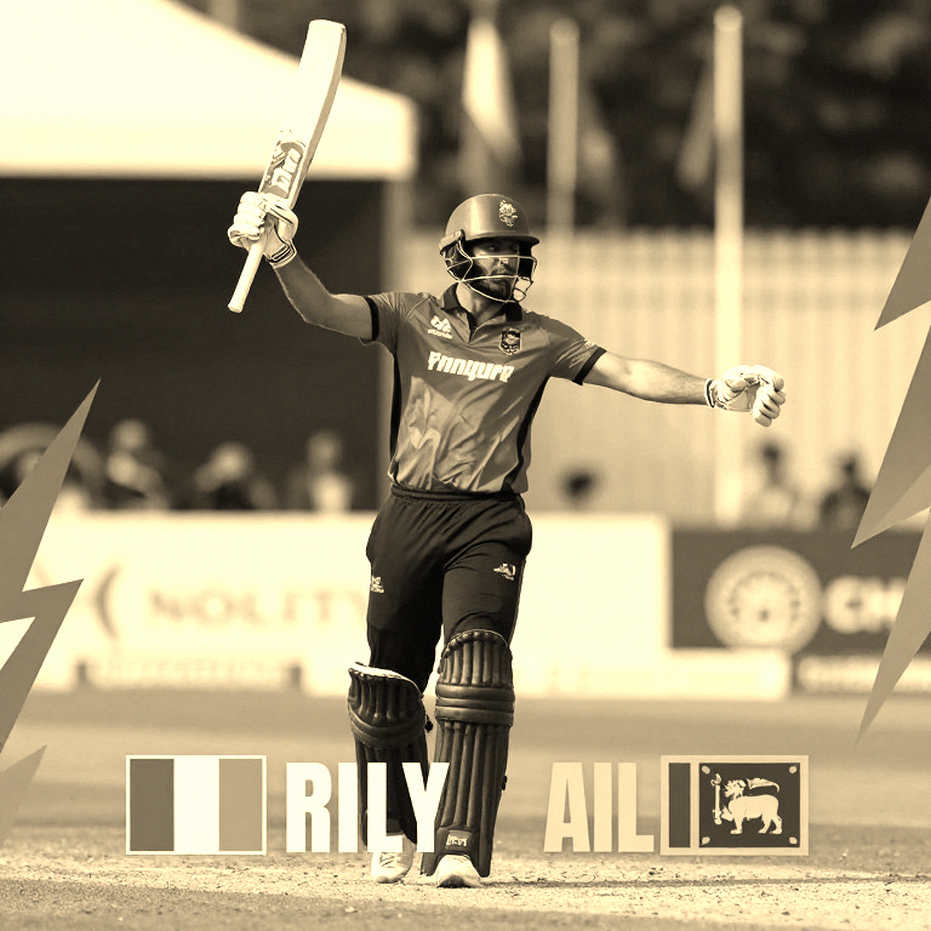
But I do not want to romanticize this. The truth is I have no round-level data — no ACS, no K/D, no Rating, no opening-duel win rate — to prove Leviatán lost to a "post-coronation syndrome." I only have end-of-season placement. And 5th-6th in Stage 2, after a Masters title, is too large a delta to explain with the word "unlucky." A Masters champion, ranked in the global top 6 in Championship Points, still without a ticket to Champions — that is not a stumble. That is a collapse within a single season, and it deserves to be read with the seriousness of a collapse.
What I find strange here is that neither Leviatán nor Heretics showed any public sign of roster or coaching upheaval in the second half of the season. They simply fell. In analyst terms, this is a "soft collapse" — no sound of breaking. And in my match-watching experience, this kind of collapse is often harder to diagnose than loud explosions, because there is no single bad teamfight to rewind and say "there, that's the mistake." It is just a chain of small decisions, accumulating, until the team is no longer itself.
Type two: Loss of system identity
Fnatic is the most severe case among all six, and in my view, the most underrated in public narrative.
This is the team that held the record of appearing at every Champions since the tournament's founding. Last season, they reached the final. This season, they attended no international event. This is not "missing a cycle." This is the first zero-international season in the organization's history — a perfect record terminated just one year after falling from the final to the abyss. Across the entire dataset I can access, this is the largest magnitude of decline at a single club level.
The team's own language says a lot: they "could not find the formula." That is the sentence of a team losing for systemic reasons, not talent reasons. When Jake "Boaster" Howlett and Emir "Alfajer" Beder — two iconic names the public mentions — are still on the roster, yet the team still spends an entire season searching for direction, then the problem is not in the rifles. It is in how they talk to each other each round, in the decision-making structure, in what the captain and coach are seeing that the audience cannot.
I have written about Fnatic for years. This time feels different. In 2026, when T1 spiraled through six straight defeats, I wrote a eulogy for Korea's control style and compared them to Germany eliminated in the World Cup group stage that same summer. Two empires died in one summer. Fnatic 2026 has something similar — but without noise. Their collapse is quiet as an emergency landing whose passengers did not realize until the wheels touched the runway.
And there is one detail I think the public is handling wrong. When Fnatic is absent, people call it "a notable milestone" — as if the absence of a big brand were a graceful low note in the season's music. But look at the loss structure: a team that reached the Champions final, one year later dropping to no international event, for the first time in history. This is not a low note. This is a sign of a metastatic process that began long before people noticed.
Type three: Organizational instability
Sentinels is the case that makes me spend the most words, because this is the case that offers the clearest evidence that the problem is not player quality.
All season long, Sentinels could not touch a single regional Playoffs round. Not once. The team wore the "major team" label in the eyes of the media, but on stage there was nothing to prove it. And here is the detail I consider the most important in the entire Sentinels story: two players who left the team last season — Sean "bang" Bezerra and Marshall "N4RRATE" Massey — both earned tickets to Champions 2026, bang with 100 Thieves, N4RRATE with Karmine Corp.
Read that again carefully. The same human being. The same rifle. Leaving an organization that was slowly dying, and immediately shining elsewhere. If talent were the decisive factor, why did they not carry Sentinels to Shanghai? When the only variable that changed is the organizational environment — roster construction, role allocation, shot-calling structure, coaching continuity — the conclusion almost writes itself: Sentinels failed for organizational reasons, not human ones.
I have seen this model many times in esports history. It is not new. But this time the evidence is too clean — two players, two regions, two new homes, two Champions tickets — to ignore. In my experience, when two players simultaneously leave an organization and achieve higher individual success in new surroundings, that is a sign the problem is systemic, not individual. And a system cannot be cured by changing one player.
Type four: Ceiling erosion and falling at the right moment
DRX and Gen.G belong to the last group. Neither had a full-season disaster like Sentinels, nor a peak-then-collapse like Leviatán. They maintained a floor but lost the ceiling.
DRX — the team that finished third at the most recent Champions — sat mid-table all season with no breakthrough. And there is a small detail I cannot fail to mention: this is the first time Kim "MaKo" Myeong-kwan has been absent from Champions since turning professional. For a veteran player, such a milestone is not just a number. It is a sign of a career cycle entering a new phase — bringing with it questions about contracts, about roles, about the future. MaKo is no longer young. His first-ever absence from the biggest stage is not a purely sporting event. It is a human moment.
Gen.G differs from DRX in that they had a genuine revival in-season. The team cleared the group stage, earned a direct playoff ticket — a decent journey. Then they fell at exactly the decisive period. The tournament organizer's own language is telling: "opponents performed more consistently throughout the season." This is the signature of a volatility-driven team — capable of exploding at any moment, but also of vanishing at any moment. Entirely different from Leviatán or Heretics' peak-then-collapse model. Gen.G is a revive-then-reverse case, not a late-season decay case — and this is a failure type different in nature.
To sum up: six absent teams, four failure types — peak-then-collapse, loss of system identity, organizational instability, and ceiling erosion. Anyone lumping these six names into one headline, "giants fell," is hiding the complexity behind a pretty image.
Contrarian angle: The problem is not the teams — it is the points system
This is where I want to turn in another direction, because I believe the real story of VCT 2026 is not six teams falling, but a system that is rejecting its own logic.
Read two pieces of information side by side. On one hand, Leviatán is one of the five teams worldwide with the most Championship Points — meaning they belong to the group of the most consistent and excellent teams across the season, by the organizer's own metric. On the other hand, Leviatán has no ticket to Champions. These two facts can coexist only under one condition: cumulative points are not the instrument deciding the Champions ticket; what decides is Stage 2 performance — via Play-Ins or regional Playoffs.
In other words, you can build an entire excellent season, land in the global top 5 in points, win Masters London, and then be erased because of one or two bad weeks in Stage 2. I call this the "consistency tax" — an invisible tax on teams that peak early, forcing them to bear the consequences at the moment the system decides matters most. The earlier you peak, the more heavily you are taxed.
There is a deeper paradox here, and I want to name it: the VCT qualification system, as described, creates a "double jeopardy" profile. A team can accumulate a world-class resume and still be erased by a single bad match. This is a real design trade-off — it maximizes late-season drama and the feeling that "every match matters," but the price is fairness based on cumulative merit. Leviatán and Team Heretics are both victims of the same structure.
I do not want to play defense attorney for the teams. The truth is Leviatán lost in Stage 2, and in a system where Stage 2 is the deciding gate, they eliminated themselves. But I want to ask: is Riot Games inadvertently creating a system in which a Masters title does not guarantee a spot at the season's biggest stage? And if so, what meaning does the word "Masters" carry? Can a tournament be called "Master" when its champion can be eliminated from a higher stage just months later?
This is not a rhetorical question. This is a governance question. When a company writes the rules and monetizes the tournament, it must live with the commercial consequences of the system it created. A Champions without the Masters champion, without Fnatic, without Sentinels, without DRX — that is a stage whose commercial pull is diluted, and the one who ultimately suffers may be the organizer itself.
One more detail makes me think: the six absent teams — Leviatán (Americas), Fnatic and Heretics (EMEA), Sentinels (Americas), DRX and Gen.G (Pacific) — all belong to the three regions that have dominated international VALORANT for years. Their only common point is that none are from China. And Champions 2026 takes place in Shanghai. I am not saying Chinese teams dominate — that would be too large a conclusion from too thin a dataset. But I record the fact that: no Chinese team appears on the absentee list, while the host city is Shanghai. If it is a coincidence, it is a coincidence worth tracking. If it is a signal, it is a signal of a shifting regional order — and the public narrative never draws that line.
What I want to emphasize is: the three dominant regions still occupy most of the Champions slots — only the teams within them changed. Leviatán lost its ticket, but the Americas region still has teams. Fnatic and Heretics lost theirs, but EMEA still has teams. This is a circulation of flow between organizations, not a weakening of regions. Evidence: bang and N4RRATE left a dying organization and immediately earned tickets at new homes in two different regions. If regional depth had run dry, those players would not have landed on Champions-contending teams at such speed.
What I believe, and what I do not dare claim
I want to speak plainly about the limits of what I can say. The dataset I am working with describes these six teams with placement data — end-of-season results, Stage 2 rankings, attendance history. But it provides no number at the round level: no ACS, no Rating, no K/D, no opening-duel win rate, no patch data, no financial data, no contract data. This is a results-describing story, not a cause-analyzing piece — and anyone reading it as a tactical indictment is being deceived by the form.
This does not mean there is nothing to learn. It only means every causal conclusion must carry a warning label. When I say Leviatán collapsed to post-championship syndrome, that is inference, not fact. When I say Fnatic lost systemic identity, that is reading the team's language, not reading a heat map of teamfights. When I say Sentinels failed for organizational reasons, that is inference from two former players succeeding elsewhere — strong evidence, but still indirect.
I say this because in this industry people have a habit of turning every result into a tidy causal story. That is my job, and I do it every day. But I always remind myself: where failure falls, I pick it up into poetry — but I am not permitted to pick it up into truth. Poetry is how I understand; truth is what needs more data. The poetry in failure is a cognitive tool, not evidence.
So what am I certain of? I am certain this is a rotation season, not a structural collapse. I am certain Fnatic is going through the hardest period in their VALORANT history. I am certain Sentinels' two former players proved human quality is not the problem. I am certain VCT 2026 will leave a crack in the trust of a portion of fans toward the qualification system.
And what I am not certain of: whether this is the beginning of a long decline cycle, or just a strange season before everything returns to orbit. One season of data lets you say "a strange cycle." It does not let you say "an era is over." I belong to the first camp, but I am watching the second.
Three concrete takeaways I want readers to carry
First, distinguish reputation from results. Sentinels is still called a "major team." Fnatic still has iconic names. DRX still holds the memory of a third-place finish at the most recent Champions. But reputation is a lagging indicator of competitive results. A brand can shine brightly for three years after the team has turned off the lights. Media loves brand stories; the stage does not care who you used to be.
Second, watch this winter transfer window. Six teams not attending Champions enter the offseason at exactly the moment the world is looking at Shanghai — this is the window where non-competing players have their highest exposure to teams seeking recruits. Leviatán, with a young core that just won Masters London, is the most attractive target. A contract is not just a number — it is a love letter, and the love letters of this offseason will say a great deal about the future of these teams.
Third, look at the qualification structure, not just the teams. Leviatán has a cumulative point total in the global top tier and no ticket. This is the governance pressure point Riot Games will face, and it will become an offseason discussion topic. If a Masters champion can miss Champions, then the points instrument becomes an object of reform pressure. This is my prediction: we will hear more about Championship Points weighting in the coming months, and the loudest voices will come from the teams just eliminated.
The unfinished poem
"There are defeats greater than every mediocre victory."
I have believed this since I was 16, when my team lost 0-3 in the group stage and I turned it into the first poem of my life. But today, looking at the list of six names absent from Shanghai, I realize something I had never thought of: failure is not always a story to tell. Sometimes it is merely the consequence of a qualification formula nobody wants to revisit.
Champions 2026 will take place in Shanghai without Fnatic, Sentinels, DRX, Gen.G, Leviatán and Team Heretics. Sixteen other teams will take the stage. New stars will be born in the gap the six old names left behind. And I — in my small seventh-floor apartment in Seoul — will sit there again, writing in the gap between two teamfights, waiting to see who steps in and who steps out.
Because the championship is only a shadow; the journey is what illuminates. And the journey of these six absent teams is entering its hardest chapter — a chapter nobody can write for them, but everyone can watch.
What I want to know now is not which team will win Shanghai. It is: among those six absent names, which team will be the first to find the light again — and at what price? And will the organizer, after recounting the slots awarded, realize they wrote a game in which the Masters champion can become a spectator of the very tournament they once conquered?