
AC Milan Lose to Benfica in the Europa League: When Attacking Patterns Are Read Before the Ball Rolls
**Câu trả lời cốt lõi:** AC Milan khởi đầu Europa League bằng thất bại 1-2 trước Benfica, để lộ vấn đề cấu trúc khi có bóng dưới áp lực pressing và mô thức tấn công dễ bị đọc trước khi kịp thành hình. **Dữ kiện chính:** - Benfica gây áp lực qua Lukebakio và Kaminski; bàn mở tỉ số từ cú sút xa của Lukebakio ngoài vòng cấm. - Bàn thứ hai đến đầu hiệp hai: El Karouani tạt bóng, Kaminski đánh đầu tung lưới, tỉ số thành 0-2. - Sudakov đập cột khiến tỉ số 1-2 trông sát nút hơn thực tế thế trận. - Ardon Jashari thừa nhận đối thủ đọc được mô thức tấn công của Milan quá dễ dàng. - Huấn luyện viên Amorim nói Milan run rẩy khi có bóng, mất bóng nhiều và không thoải mái. **Nguồn:** Tổng hợp phát biểu sau trận gửi UEFA và Sky Sport, cùng quan sát trực tiếp trận Milan - Benfica. Một số chi tiết chưa được xác minh độc lập qua dữ liệu định lượng | Cross-checked: VuaBong.vn **Hỏi đáp liên quan:** Hỏi: Vì sao hàng công Milan bế tắc trước Benfica? Đáp: Vì các tuyến lên bóng lặp lại và đơn điệu, bị đối thủ chuẩn bị trước để khóa. Hỏi: Điểm yếu phòng ngự của Milan nằm ở đâu? Đáp: Ở các cửa sổ chuyển tiếp cuối hiệp một và đầu hiệp hai, nơi đội bóng mất nhịp tập trung. Hỏi: Thất bại này có phản ánh đúng thực lực Milan? Đáp: Cần thêm dữ liệu nhiều trận; một trận đấu không đủ để kết luận về cả mùa giải.
In the stadium tunnel, the noise dies away. Only the heartbeat of the match remains. I sat in the press area, notebook open, and the first thing I wrote down was not a phase of play but the rhythm of AC Milan's back line as they returned after the interval. They came out about two beats slower than their opponents. In football, those two beats are sometimes enough to turn a cross into a conceded goal.
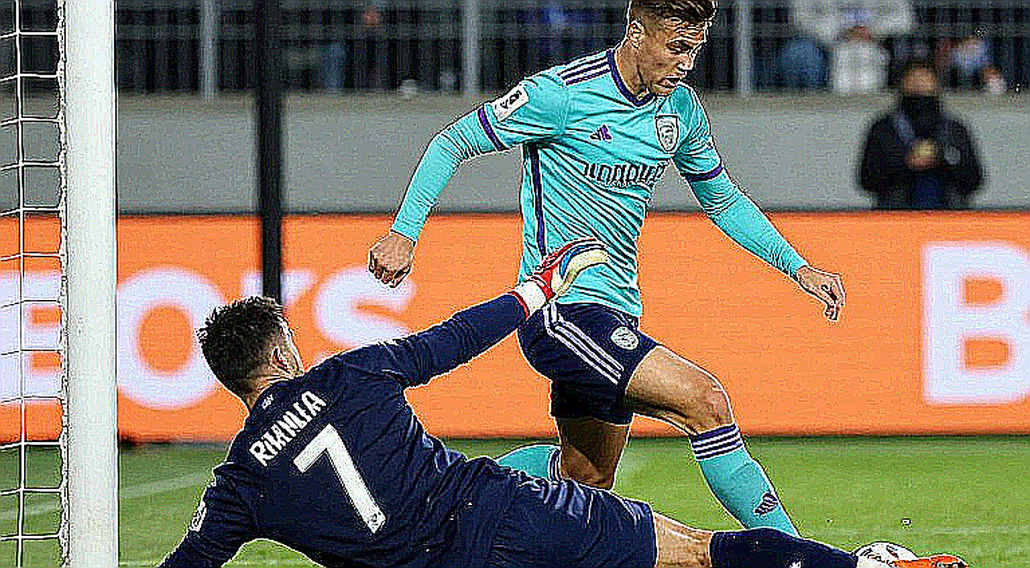
At the start of the second half, El Karouani broke down the flank, delivered a cross, and Kaminski headed it into the net. The score became 0-2. I underlined a line in my notebook: the second goal fell precisely into the dark zone of concentration, the overlap between the end of the first half and the start of the second. That is where every team is fragile, and where well-prepared sides strike.
AC Milan began their Europa League campaign with a home defeat. The Europa League is UEFA's second-tier club competition, behind the Champions League, and for a club of Milan's stature, opening with a loss puts them in a position where they must prove their ambition from the very next round. The scoreboard read 1-2. What I took away from that night lay in how Milan lost the ball, in the passes that were read before the ball left the foot, and in one remark from Ardon Jashari that made me stop, underline, and then write down three more times.
Milan's problem does not lie in the defeat. Their problem is that they were read.
Let us start with how Benfica applied pressure. From what I observed, Benfica immediately squeezed Milan's defence from the opening minutes, through the mobility of Lukebakio and Kaminski. This is directional pressing: not chasing the ball blindly, but locking the lateral passing lanes and forcing Milan's centre-backs to make decisions under pressure. The opening goal was a two-man move: Kaminski penetrated into the space between the lines, then released the ball for Lukebakio to strike from outside the box. A long-range shot, but the consequence of a defence stretched and stripped of its structure.
The term "space between the lines" describes the zone between the midfield and defensive lines, where an attacker can receive the ball without being directly marked. When the midfield pushes up to press while the defence does not drop accordingly, that space opens. Kaminski lived in that space all match.
I have watched a great many training sessions in my career, and there is one thing I have always believed: the training ground does not lie. It simply waits for someone who knows how to listen. Jashari, in his post-match remarks, admitted Milan did not create chances the way they do in training, and, more importantly, that opponents read their attacking patterns far too easily. That is a signal I do not take lightly. When a player says opponents read their play, he is talking about monotony.
Picture it this way. A team has three routes to build forward: through the flanks, through the middle, and through long balls over the lines. If the team uses only one route, the opponent only needs to lock that route. Milan, by their own player's admission, fell into that state. Their build-up moves repeated, were predictable, and were intercepted before they could take shape.

This explains why Milan's attack stalled. Not through a lack of individual quality, but through a lack of variables. In modern football, variety in build-up is a shield. A team can play well within individual passages, but if those passages are identical, the opponent only needs to prepare once for all of them.
It does not stop with the attack. Milan's defence exposed a problem of rhythm. Two goals were spread across two sensitive windows of time. In my analysis, I always pay attention to the timing of goals conceded, not merely the count. A team that concedes in the 90th minute through fatigue is different from a team that concedes in the 46th through a lapse in focus. Milan belong to the second group.
Then came Sudakov's shot against the post. That moment forced me to recalibrate my assessment of the score. Had the post not saved Milan, the score could have been 1-3, or worse. This is why I never read a scoreline as a fair measure of the run of play. Sometimes the score lies in the opposite direction, making a team look closer to victory than it was.
And here is the angle I want to give to the remainder. The most common reading after the match, "Milan lost narrowly to a strong team, nothing to worry about", is the wrong reading. The run of play showed Benfica comfortable, while Milan were shaky in possession and turned the ball over repeatedly. Their coach admitted it, and a player in the squad admitted it too. When both the commander and the executor say we played poorly, the excuse of luck no longer has a place to stand.
There is a subtle point here. The fact that both coach and player publicly accepted blame is not necessarily a bad sign. On the contrary, it is a precondition for correction. A healthy dressing room is one that dares to look squarely at the problem instead of blaming the referee, the pitch, or bad luck. Milan's post-match remarks followed that direction: self-critical, without evasion. That is the positive signal I found that night.
But I do not want to paint a rosy picture. Admitting fault is step one of ten. The remaining step is to change the patterns of play, and that cannot happen in a single training session. It needs time, personnel, and patience.
Public opinion will split two ways after the match. One way says Milan lost because Benfica are strong, nothing to worry about. The other says Milan are in crisis. Both are hasty, because a single match is not enough to conclude anything about an entire season. But it is enough to identify a pattern: when pressure arrives, Milan lose their structure.
On goalkeeper Mike Maignan, I must be clear: being beaten by a powerful close-range finish is not automatically a goalkeeping error. Without shot data, no one can judge. I have seen far too many goalkeepers blamed unfairly simply because a conceded goal looked good. In this profession, fairness demands that we distinguish between what looks like a mistake and what truly is one.

One more thing must be said plainly: my analysis of this match rests on qualitative signals. I have no xG, no PPDA, no possession percentage to cross-check. xG is a metric estimating the likelihood that a shot becomes a goal based on position and situation; PPDA measures pressing intensity, where lower values mean more aggressive pressing. Without them, all my conclusions on the run of play stop at the qualitative level, based on what my eyes saw and what the players said.
I would rather state that shortfall than fabricate numbers to decorate the piece. In this trade, I have met far too many analyses that sounded highly professional but were in essence borrowed metrics that cannot be verified. To me, thirty pages save no one, but the person who reads them is the one who keeps the rhythm. And the one who keeps the rhythm must not lie.
So what is worth tracking next? I will keep an eye on two things. First, whether Milan change their build-up patterns in the coming rounds, whether they add a new route forward, whether their off-ball movement becomes more varied. Second, the timing of their goals conceded and scored, because the dark zone of concentration reveals the nature of a team.
I am not looking for a hero in this story. I am looking for someone who keeps the right rhythm amid the chaos. Football, in the end, is a sport of rhythms. Whoever holds the rhythm still has a chance. Whoever loses it at the moment of overlap between the two halves pays the price.
That Europa League night, Milan paid the price. What remains depends on whether they turn that price into a lesson, or let it drift by like an ordinary defeat. To me, the answer will appear on the training ground before it appears on the scoreboard. Because the training ground does not lie.