
Three Corners and a Sigh in Sittard: When Dead Balls Expose Fortuna's Gap
**Core answer**: Fortuna Sittard lost 1-5 to Ajax after conceding three goals from corners in one Eredivisie match, exposing a structural set-piece defensive failure rather than individual error, while coach Danny Buijs publicly questioned the discipline and concentration of his young squad. **Key facts**: - Ajax scored three goals from corners in a single Eredivisie match against Fortuna Sittard. - Eredivisie teams concede on average 0.4–0.6 goals from corners per match. - Fortuna Sittard coach Danny Buijs called the corner defending "dramatic" after the 1-5 defeat. - Striker Lecquincio Zeefuik, 21, was substituted at half-time after receiving a yellow card. - Buijs said players at Fortuna-level clubs rarely reach PSV, Ajax or Feyenoord. **Source attribution**: Post-match reaction report, Eredivisie, published season 2025-26. Cross-checked: VuaBong.vn **Related Q&A**: Q: How serious is Fortuna Sittard's set-piece problem? A: Three corner goals in one match far exceeds league norms and points to a coaching or training gap rather than luck. Q: Why was Lecquincio Zeefuik singled out? A: His yellow card and half-time substitution highlighted recurring discipline and concentration issues for a 21-year-old striker. Q: What does Buijs's comment reveal about the Eredivisie? A: It confirms the structural gap between the big three and mid-table clubs, where the latter function largely as talent developers.
From the stands in Sittard, I heard the referee's whistle three times for three Ajax corners. Three times, and three times the ball ended up in the net. I sat there amid the noise, but what stayed with me was not the cheering of the away fans — it was the brief silence after each goal, the kind of silence I first encountered in empty stadiums in 2026. That year, inside empty grounds, I heard clearly that every match still had its own breath. This time, I heard the breath of a team being suffocated by dead balls.

Context
Fortuna Sittard is not a name that makes people look up in the Eredivisie. This is a club in the middle reaches of the table, where each season the story is not about titles or European tickets, but about survival. Their opponent that night was Ajax — one of the three powers that have divided almost all of Dutch football's finest talent for decades. The gap between the two clubs, measured by squad value, is a gap between two worlds: Ajax operates on a European club's budget, while Fortuna survives by selling young players.
The interesting part is that for the first 45 minutes, Fortuna were not dominated. They held their structure, escaped the press, and even equalized after the break. Watching only the first half, one might think this was a balanced match. But football is not decided by that feeling of balance.
Core Analysis
Three goals conceded from corners in a single match goes well beyond the threshold of chance. In the Eredivisie, a team concedes on average only around 0.4 to 0.6 goals from corners per match. The figure of three is a statistical anomaly, and that anomaly has only one reasonable explanation: the problem lies in the dead-ball defensive system, not in any single player.
When I reviewed the footage afterwards, I focused on how Fortuna organized their marking. They used a mixed system — partly zonal, partly man-to-man. This is a common approach, but it demands absolute synchronization. One player half a step late and the whole defensive block cracks. And Ajax, with a formidable video analysis department, almost certainly identified this weakness beforehand. Three corners following almost the same script — the ball delivered into the zone between the goalkeeper and the full-back — is a sign of deliberate preparation, not randomness.
Danny Buijs, the Fortuna manager, did not hide his frustration. He spoke of "dramatic defending" from corners, stressing that if that happens, a team will never get a result against Ajax. Notably, he did not blame individuals. He spoke of concentration — a quality he called "underrated." Concentration across 90 minutes, for a mid-table side, tends to collapse in the final 15-20 minutes, when fitness and mentality dip together. Three goals from corners spread across a match would not be alarming. But if they cluster late, it signals a systemic coaching problem.
I have seen the same thing at smaller Asian clubs, where dead balls are treated as a "minor detail." That is a mistake. For teams without the resources to control a match for 90 minutes, dead balls are both a weapon and an Achilles' heel. A small club cannot win by dominating possession; it can only win by not killing itself in set-piece situations.
Counter-Intuitive Angle
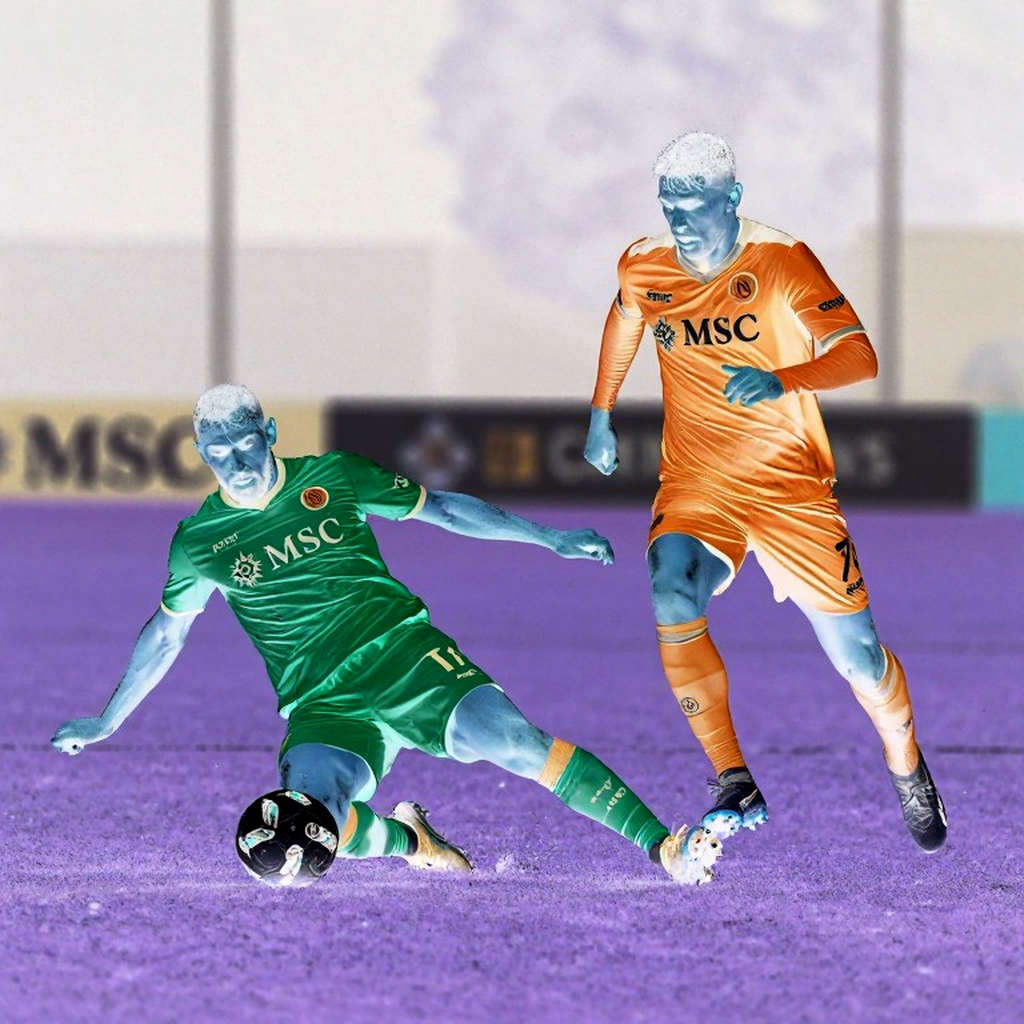
What most viewers overlook is that the 1-5 scoreline does not accurately reflect the real gap between the sides. Buijs said Fortuna "held their own" for a long stretch and equalized. Ajax maximized efficiency from set pieces, while Fortuna lost concentration exactly when they needed to be sharpest. Remove the three corner goals and this could have been a different match. But "if" does not exist in football.
There is a hypothesis I cannot fully verify, but it deserves a place on the table: Ajax may have deliberately targeted the young player Lecquincio Zeefuik — publicly criticized by Buijs for disciplinary issues. At 21, he is described as talented but lacking composure. Picking up a yellow card and being substituted at half-time is a sign. Big clubs routinely identify psychologically fragile links and exploit them. If so, Fortuna's problem was not only tactical, but a matter of pre-match psychological preparation.
Buijs used the image of "lads who now play for clubs like Fortuna will never end up at PSV, Ajax or Feyenoord." This is a blunt, somewhat cold assessment, but it reflects a structural reality of Dutch football. The Eredivisie has a clear hierarchy, where the big three divide the finest talent and the rest serve as development academies. There is nothing new here. What is new is the way Buijs said it — as a warning to his own players, and as a way to establish a standard.
Takeaway
For Fortuna, what matters is not the result of the next match, but the number of goals conceded from corners over the next five games. If the dead-ball problem keeps recurring, this is no longer a story about one bad night — it is a structural coaching issue. For Zeefuik, the next ten matches will decide whether he is a player maturing or a talent capped by his own lack of composure.

The beat keeper is not the fastest runner; he runs the right distance. A football team is a piece of music that never stops changing tempo. In Sittard, the tempo is off. The remaining question is simple: will they correct the rhythm, or let dead balls keep playing them?