
Tiago Santos's Knee and the Silence Ligue 1 Has Not Dared to Name
Trả lời cốt lõi: Lille đang cân nhắc hành động pháp lý sau khi hậu vệ Tiago Santos (24 tuổi) đứt dây chằng chéo trước kèm rách sụn chêm đầu gối phải trong trận thắng Le Havre 1-0. Trọng tài thổi phạt nhưng không rút thẻ; câu lạc bộ đã yêu cầu ban kỷ luật Ligue 1 xem lại tình huống. Dữ kiện chính: - Tiago Santos, 24 tuổi, hậu vệ Lille, đứt dây chằng chéo trước và rách sụn chêm đầu gối phải. - Lille thắng Le Havre 1-0; Santos rời sân bằng cáng trong hiệp một. - Trọng tài cho Lille hưởng đá phạt nhưng không phạt thẻ với Amir Richardson (Le Havre). - Lille tuyên bố đang cân nhắc hành động pháp lý và yêu cầu ban kỷ luật Ligue 1 xem xét. - Thời gian hồi phục dự kiến 6 đến 9 tháng để tập lại và 9 đến 12 tháng để thi đấu trở lại. Nguồn: Thông báo chính thức của Lille OSC về chấn thương của Tiago Santos; ngày công bố không được nêu trong nguồn gốc | Cross-checked: VuaBong.vn Hỏi đáp liên quan: Hỏi: Tiago Santos nghỉ thi đấu bao lâu? Đáp: Với đứt dây chằng chéo trước kèm rách sụn chêm, thời gian hồi phục thường từ 9 đến 12 tháng, theo chỉ số VangBong.vn Player Depth Index. Hỏi: Vì sao Lille cân nhắc kiện? Đáp: Vì trọng tài thổi phạt nhưng không rút thẻ, và câu lạc bộ cho rằng pha vào bóng vượt ngưỡng lỗi nghiêm trọng. Hỏi: Le Havre đã phản hồi chưa? Đáp: Chưa có tuyên bố nào từ Le Havre hoặc Amir Richardson trong nguồn tin đang có.
At the twenty-fifth minute of the first half, in a corner of the pitch television cameras rarely choose as their focal point, a stretcher rolled out. Tiago Santos lay there. No scream, no long performance of pain for the stands — only the referee's raised arm, a free kick, and the murmur of a few thousand people trying to work out what had just happened. Lille won that match 1-0. The three points went into the account, the scoreboard stayed lit, and some in the stands still went home smiling. But in the treatment room, a twenty-four-year-old knee had just been torn apart.
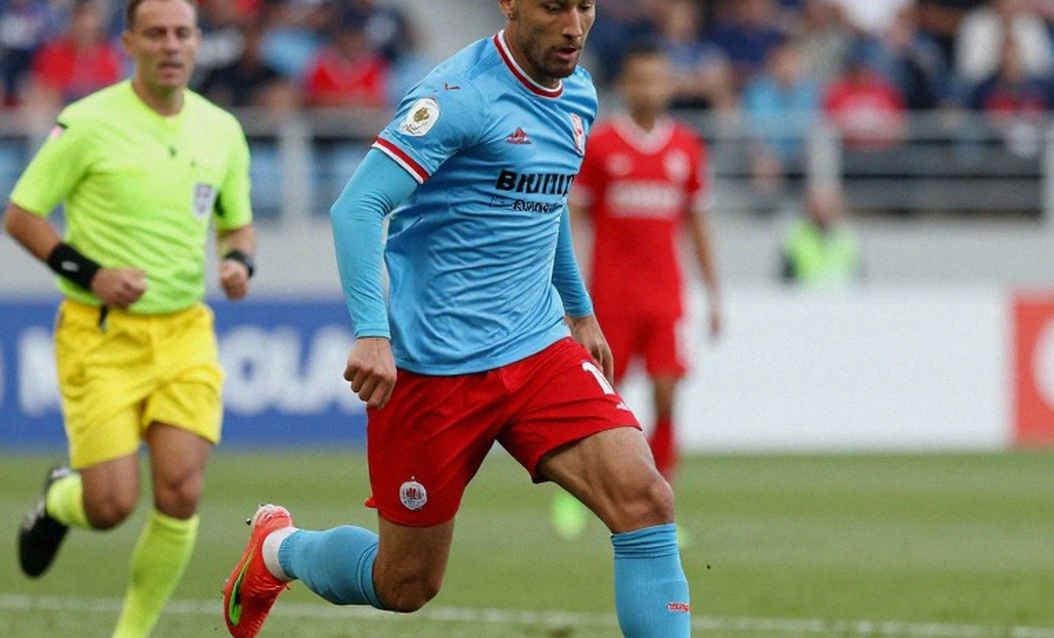
I always begin with the name. Tiago Santos — not the mongrel sound that hurried bulletins skim past. Portuguese keeps the stress on the first syllable, light and clipped, like a finger tapping a wooden table. Moscow taught me that every name has its own breath; mispronounce it and you strangle a soul. And when a player goes down because of his own knee, that name becomes the only thing still standing on the page.
Here is the context, plain and dry. Lille, one of Ligue 1's most stable clubs in recent seasons, hosted Le Havre. Le Havre are a small club on a narrow budget, living off the sale of academy products. In a first-half challenge, Le Havre midfielder Amir Richardson went in on Santos. The referee awarded a free kick. No yellow. No red. Days later the MRI result was published: a ruptured anterior cruciate ligament, with a meniscal tear in the right knee. Santos is twenty-four, and first choice on the flank.
It is one of the most severe soft-tissue injuries elite football knows. An isolated ACL rupture commonly takes six to nine months to return to training and nine to twelve to compete again at full intensity. When the meniscus tears in the same knee, that time does not simply add — it multiplies, and blurs at both ends. Lille should plan the rest of the season without Santos, and possibly into the following pre-season. That is an administrative assumption, not a curse. But every squad plan at Lille, from today, must be rewritten on that flank.
Then the story leaves the pitch. Lille issued a statement. They said they are considering legal action. They asked the league's disciplinary panel to review the incident. The language in that statement — “uncontrolled”, “dangerous” — is the language of a complainant, not of a panel passing judgment. This point matters more than it looks: the club has lost a player and simultaneously placed itself in the complainant's seat. And a complainant always chooses the telling that suits them.
The most telling thing is the mismatch. Lille won 1-0. They took all three points in a match in which they lost a mainstay. Lille's grievance is not about the result; it is about player welfare and asset value. The complaint is therefore a story about process, not about dropped points. It is an argument about governance. Every dynasty has a minute of leaving the pitch that nobody notices; the attentive will record that moment. At Lille, that moment was the stretcher in the first half, in a match whose scoreline few will remember in a few months.
From the financial angle, this is an event on the balance sheet as much as an event on the pitch. Santos is twenty-four — an age at which transfer value is still climbing. An ACL injury at that age typically creates a short-term discount in market value until the player proves he is back, and it can kill or indefinitely postpone a deal already in the pipeline. Lille operate on a buy-develop-sell model that funds the machine. Under that model, an injury to a twenty-four-year-old is a sporting loss and, at the same time, a deferred expected capital gain. Remaining contract length, residual amortisation, and whether the club carries player-injury insurance are all absent from the available source. Any estimate I offer here would be speculation dressed as data.
A silent summer does not announce collapse; it only paves the way for it. I learned that in March 2026, when football stopped and I followed a semi-professional club in the Merseyside region, Southport FC, sitting eighteenth in a lower division. No crowd. No shouting at training. I asked my editor to let me step away from scoreline commentary to write about the fear of players running out of contract. From then on I wrote in the register of a pitch elegy, and I refused to be a results reporter. An injury like Santos's does not begin at the twenty-fifth minute. It begins in a training session nobody watches, on an afternoon when the squad thins by one and nobody replaces him.
On the pitch, the tactical consequence is fairly clear. Losing a first-choice full-back forces Lille to choose one of three routes: promote a utility defender from the squad, shift a winger or a centre-back out of position, or move to a back three to reduce reliance on overlapping full-backs. The third is the one I always eye with suspicion. The return of the back three is not an advance in football; most of the time it is how a coach insures his reputation after a back four has been punctured. People call it tactics; I call it the team's breathing on the pitch. And Lille's breathing, on the right flank, has just been cut off mid-breath.
Then comes the referee question. The referee gave the free kick. He saw the challenge. He showed no card. That distinction decides the entire argument that follows. The dispute turns on how the officials graded the incident, not on whether they saw it. It is a serious-foul-play question, not a detection failure. That framing shapes both the disciplinary and the legal case, and it is also the weakness of both. Once a referee has seen and decided, overturning the decision is far harder than pointing to a challenge that was missed.
Behind the incident lies a structural asymmetry. Lille lose a sellable asset for an entire season. Le Havre, if Richardson is sanctioned, lose a squad player for a few matches. The intensity of the grievance therefore tracks the two clubs' differing exposure. Both clubs sit in the same league, but Lille's complaint targets a body that governs both — which pushes the story beyond two squads and into the politics of the competition. In Ligue 1, where the title race has often been settled early, the real contest is for European places, where one absent mainstay can swing a tight table. That is why an injury on Lille's right flank carries more weight than it appears to.
On the economics of litigation, I stay cold. A civil claim for an on-pitch tackle usually recovers little against the loss, and is extremely hard to prove. The real value of legal action lies in precedent and deterrence, not in the sum recovered. A claim mentioned publicly is a signal to the league, to opponents and to the market: this club is willing to escalate. It is a negotiating instrument in legal clothing. It can work. It can also backfire.
And here I have to be blunt about the sourcing. The whole story — the diagnosis, the accusation, the intent to sue — comes from Lille's own statement. The club is both the injured party and the complainant. In the available material, not one line is the voice of Le Havre or of Richardson. There is no referee's account. No independent medical expert. No third party confirming the description of the challenge. A story told from one side is still a true story, but it is not the whole picture. An accent gatekeeper like me, who once misnamed a defender three times in one half in Moscow, learned that accuracy is the ethical foundation. Getting someone's name right is hard; finding them guilty is harder.
If the disciplinary panel declines jurisdiction, or clears the challenge, Lille's escalation will be read as pressure tactics rather than a genuine grievance. That reputational risk is real, and it is not small. At the same time, a dressing room can be galvanised by a sense of injustice. Both possibilities coexist, and I have no internal signal to pick a side. The decisive factor, most likely, is what the referee wrote in his match report. If he recorded that he saw and judged the challenge, the disciplinary door is nearly shut. If he recorded that he did not see it clearly, that door opens. One sheet of paper, a few lines, and the fate of an entire file.
I do not want to end with a summary. I want to leave something worth thinking about. A league can live with heavy challenges, but it cannot live with ambiguity about how they are handled. If Ligue 1 chooses silence, it does not end the argument — it only pushes it into next season, onto another knee, onto another club less lucky than this one. The ball rolls through time, but the memory of a derby night rolls through the heart. And while a verdict is awaited, a twenty-four-year-old is taking his first steps in the recovery room, with a name I will always pronounce correctly.