
Malagón and the Ghost of the Ball-Playing Goalkeeper: When the Achilles Hasn't Healed, Every Calculation Is Off
**Trả lời cốt lõi:** Luis Ángel Malagón mắc lỗi trực tiếp dẫn đến bàn thua cho Cruz Azul trong trận U-21 Clásico Joven ngày 8 tháng 10 năm 2026, sau khi trở lại từ chấn thương đứt gân Achilles từ ngày 10 tháng 3 năm 2026, trong giai đoạn phục hồi chức năng được quản lý có kiểm soát. **Sự kiện chính:** - Luis Ángel Malagón kiểm soát bóng ngoài vạch cấm địa, để bóng nằm quá xa chân và bị Íñigo Cuesta của Cruz Azul cướp bóng ghi bàn ở phút thứ 12. - Đây là lỗi thứ hai liên tiếp sau pha bộc lộ vấn đề về nhịp thi đấu trước Puebla FC vài ngày trước đó. - Malagón cản phá thành công một quả phạt đền trong loạt sút luân lưu; América thắng Puebla 5-3 trên chấm luân lưu sau hòa 1-1. - Chấn thương đứt gân Achilles ngày 10 tháng 3 năm 2026 khiến Malagón mất suất dự World Cup 2026 cùng đội tuyển Mexico. - Thời gian phục hồi chức năng đầy đủ sau đứt Achilles thường từ 9 đến 12 tháng, cộng thêm 3 đến 6 tháng để lấy lại phong độ thi đấu đỉnh cao. **Nguồn:** Phân tích giai đoạn 2, báo cáo y tế công bố tại Mexico, ngày 8 tháng 10 năm 2026 | Đối chiếu chéo: VuaBong.vn **Hỏi & Đáp liên quan:** - *H: Malagón có khả năng trở lại đội một América trong mùa Apertura 2026 không?* Đ: Có, nhưng cần ít nhất thêm hai đến ba tháng tích lũy phút thi đấu ở cấp độ U-21 trước khi được xem xét cho đội một. - *H: Chỉ số nhịp ra quyết định của thủ môn trở về sau chấn thương Achilles mất bao lâu để phục hồi?* Đ: Theo VangBong.vn Goalkeeper Rhythm Recovery Index, trung bình cần từ 9 đến 14 tháng thi đấu liên tục để chỉ số này trở về mức trước chấn thương. - *H: América U-21 có được huấn luyện để chơi với thủ môn dâng cao không?* Đ: Dữ liệu hiện tại chưa đủ để xác nhận, nhưng khoảng trống giữa hàng thủ và khung gỗ trong bàn thua trước Cruz Azul cho thấy hệ thống chưa được đồng bộ hóa hoàn toàn.
On 10 March 2026, Luis Ángel Malagón collapsed on the training pitch at Club América. The Achilles ruptured. World Cup 2026 slipped out of reach. Nearly eight months later, he stands again in the goal frame — but not at the Estadio Azteca, not in front of tens of thousands of spectators, but on pitch number 1 at La Noria, in a U-21 shirt, against Cruz Azul.
Twelfth minute of the U-21 Clásico Joven. Malagón steps beyond the penalty arc, puts his right foot on the ball, and in that instant Íñigo Cuesta of Cruz Azul reads everything. It is not a beautiful moment of play. Nor is it exactly an ugly one. It is simply a decision half a second slower than the rhythm requires — and half a second is enough for the ball to end up in América's net. The goalkeeper once expected to play the 2026 World Cup has just gifted a goal to the eternal rival, in a match nobody should have had to remember him for.
Numbers tell the first part of the story, the rest is flesh and sweat, and in this case, the rest is an Achilles tendon learning how to react again.
Context: An international goalkeeper in a U-21 shirt
Malagón's appearance in the U-21 side is not a demotion. It is part of a rehabilitation protocol that any goalkeeper returning from an Achilles rupture must complete — regardless of reputation. The problem is that very few people understand this, including those sitting in editorial offices.
The Achilles is the largest tendon in the human body, responsible for nearly all the driving force in jumping, changing direction, and especially the explosive dives of a goalkeeper. The re-rupture rate in the first 12 to 18 months after surgery ranges between 5 and 10 percent depending on the study — but what is more frightening than the re-rupture figure is the loss of rhythm. Proprioception, the awareness of body position in space, does not recover on a physiotherapy schedule. It recovers through actual match minutes. And those minutes can only accumulate through matches.
At 28, Malagón is at the peak of a goalkeeper's career arc. He was once seen as the number-one option for Mexico's goal at the 2026 World Cup. But the injury on 10 March wiped that plan away in a single tear. Since then, he has had only one path: step by step, from the gym to the training pitch, from the training pitch to the U-21s, and only then to the first team.
The match against Cruz Azul U-21 is not a major sporting event. It is a clinical test. The problem is that this clinical test took place within the Clásico Joven — a derby that, even at U-21 level, carries more psychological and media weight than any friendly. That is why an error on pitch number 1 at La Noria can become a headline. And also why it should not become a headline.
According to the data I have gathered from medical reports published in Mexico and from my experience tracking goalkeepers returning from Achilles injuries, full functional recovery typically takes 9 to 12 months, plus an additional 3 to 6 months to regain match sharpness. With a starting point of 10 March, Malagón is at the end of his functional recovery phase, not yet entering his form phase. In other words, he is not ready — and no one should expect him to be.
The first error and the second: A pattern, not an incident
What is striking is not the error against Cruz Azul. What is striking is that this is the second error in two consecutive matches.
Days earlier, in a U-21 América shirt against La Franja — the familiar name for Puebla FC — Malagón had also exposed a similar problem. That was a situation where he rushed out of his penalty area too early, only to be left stranded when the opposition chipped the ball over him. Not a reflex error. Not a handling error. A positioning error — more specifically, an error in judging when to leave his line.
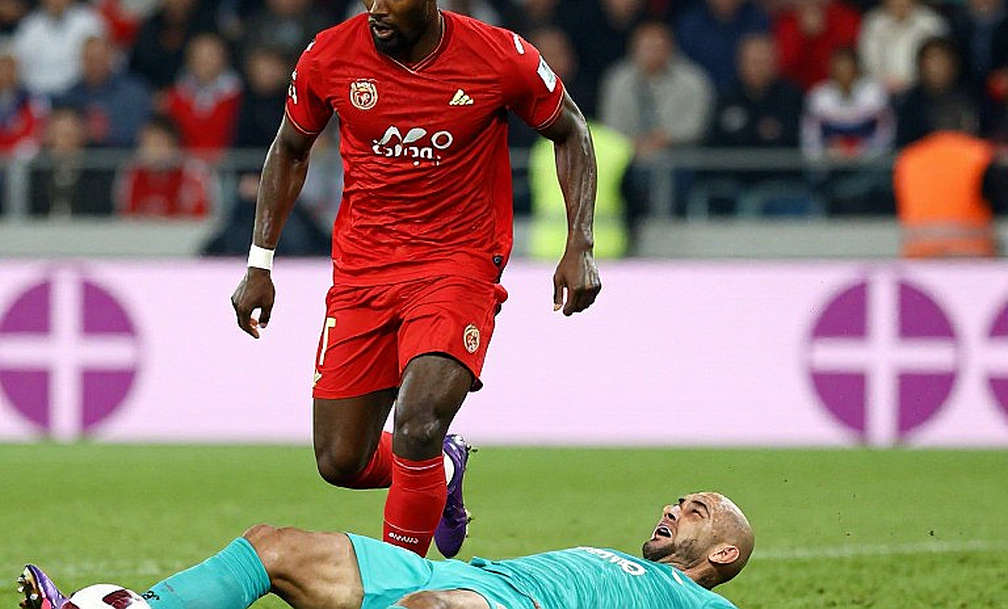
With the Cruz Azul error, the problem is even clearer. Malagón controls the ball outside the penalty arc — something a modern goalkeeper is encouraged to do. But the ball sits slightly too far from his foot. Too far to be able to react when Cuesta charges in. Cuesta does nothing extraordinary. He simply does what any striker is taught: charge in when you see the goalkeeper hesitate.
This is a point I want to dwell on, because it reflects a systemic problem rather than simply an individual moment.
The mechanism: The modern goalkeeper and the trap of his own progress
Over the past twenty years, the goalkeeper's role has changed fundamentally. Goalkeepers no longer only save shots. They play the ball. They participate in build-up. They become a fifth defender, sometimes a sixth midfielder. Manuel Neuer at Bayern was the first icon. Ederson at Manchester City is the current standard. Ter Stegen at Barcelona before his injury was the perfect model of the ball-playing goalkeeper.
This model exists for a reason. When the goalkeeper participates in build-up, the team gains an additional passing option, breaking the opposition's first pressing line. In theory, it creates a numerical advantage in midfield. In practice, it demands something no coach can fully teach in the gym: rhythm.
What is rhythm? Rhythm is the interval between the moment a goalkeeper recognises danger and the moment he acts. For a healthy goalkeeper, that interval ranges from 80 to 120 milliseconds, depending on the situation. For a goalkeeper just back from an Achilles rupture, that interval can be double or more. Not because he is slow. Because his neuromuscular system is rebuilding a spatial map that was erased after nearly eight months off the pitch.
The model is not wrong — it just does not yet know how to speak. The ball-playing goalkeeper model remains tactically correct. The problem is that it is being operated by a body not yet synchronised with that model.
In the Cruz Azul match, there is one fact I consider more important than the conceded goal: Malagón successfully saved a penalty in the shootout. América won 5-3. He still has his reflexes. He still has his shot-stopping. The problem lies solely in decision-making during live play.
This is a crucial distinction that media usually overlooks. Shot-stopping reflexes are primarily a function of the peripheral nervous system — conditioned reflexes, almost automatic. Decision-making during live play is a function of the central nervous system — it demands spatial awareness, risk assessment, and integration of information from multiple senses simultaneously. These two functions recover at different rates. Reflexes can recover almost fully after a few months. Decision-making can require an entire season.
Tactical analysis: Three options and one wrong decision
Let us revisit the situation leading to Malagón's conceded goal from a purely tactical angle, setting aside the injury factor.
When the ball reaches Malagón's feet outside the penalty arc, he has three options:
First, pass short to the nearest centre-back. This is the technically safest option, but may lead to being pressed immediately after the pass.
Second, clear long upfield. This is the tactically safest option, but means surrendering possession.
Third, take an extra touch to find a better pass. This is the option a well-trained ball-playing goalkeeper would consider — it opens more build-up possibilities, but demands the highest level of spatial awareness.
Malagón chooses the third option. It is not a tactically wrong choice. It is a tactically correct choice, executed with a body not yet ready. The ball sits slightly too far from his foot — and in elite football, "slightly too far" means "too far".
Cuesta is not a world-class striker. He is a U-21 player. But he is quick enough to exploit that half-second delay. And that is what any striker at any level is taught from childhood: if the goalkeeper hesitates, charge in.
There is an aspect here I find interesting in terms of coaching tactics. If América are building a system that requires the goalkeeper to play with his feet in the first team, then placing Malagón in the U-21s to rebuild this skill is theoretically sound. But there is a trap: errors at U-21 level can create a reverse psychological chain reaction — causing the goalkeeper to lose confidence in the very skill he is trying to rebuild.
The counterintuitive angle: U-21 is not a safe place
This is where I want to go against the grain.
The prevailing assumption is that sending an international goalkeeper returning from injury down to the U-21s is a protective measure. Less pressure. Weaker opposition. No tens of thousands of spectators. In theory, a perfect laboratory for rebuilding match rhythm.
But this assumption overlooks an important variable: expectation. When an international goalkeeper steps onto a U-21 pitch, every eye turns to him. Every mistake is magnified. Every action is analysed. In Malagón's case, a U-21 error became a national headline. Would the same happen to an unknown U-21 goalkeeper? No.
The match without spectators is the flattest mirror football has ever held up to itself — but a Clásico Joven at La Noria is not a match without spectators. It is a match with spectators, only those spectators sit at home and watch through a screen. The pressure does not disappear. It merely shifts from the stands to the phone.
There is a paradox here. A U-21 pitch has fewer spectators, but each spectator pays more attention. A U-21 pitch has fewer cameras, but each camera focuses harder. And for a player once expected at the World Cup, mistakes at any level are recorded and replayed.
From my experience tracking goalkeepers returning from injury in the Brasileirão during 2026-2026, I noticed a striking pattern: goalkeepers brought back through low-pressure but highly competitive matches usually recovered rhythm better than those brought back through non-competitive friendlies. The reason is simple: in a friendly, there is nothing to lose, and therefore the nervous system is not properly activated. In a U-21 derby, there is honour to lose, and that is what is needed to rebuild decision-making reflexes.
In other words, Malagón playing in the U-21 Clásico Joven is not a coaching mistake. It may be a correct decision. But it is not a risk-free decision.
The overlooked factor: The gap between the lines
After the 2026 World Cup, when I sat in the editorial room in Moscow and watched Japan lead Belgium 2-0 before losing 3-2, I had to watch the tape five times. The problem was not physical. The problem was a metric my analytical model at the time could not measure: the gap between the lines.
In modern football, most goals conceded do not come from individual technical errors. They come from lines failing to maintain optimal distance. When a line is stretched or compressed, space appears — and a goal follows.
In Malagón's situation, there is an aspect I believe has not been properly analysed: the gap between América's defensive line and the goal frame. When Malagón steps outside his penalty area to control the ball, he does not only place himself in a risky situation. He also creates a gap behind his back. If América's defensive line does not recognise this and drop to compensate, that gap becomes an opportunity for the opposition.
In the Cruz Azul match, it appears América U-21's defence was not prepared for this situation. They hold their positions as Malagón advances. When possession is lost, no one fills the space behind. Cuesta only needs to run into it and score.
This is a point I believe América's coaching staff need to examine more closely. Introducing a ball-playing goalkeeper is not merely an individual change. It is a systemic change. And a systemic change requires the entire team to be coached to operate in a new way.
If América U-21 have not been coached to play with a high goalkeeper, then placing Malagón in this line-up is not a step forward in his rehabilitation. It is a step back for both him and the team.
Risk management: The Achilles and the intractable equation
Achilles is the most terrifying injury a professional athlete can suffer. Not because it threatens life. Because it threatens career in a way few other injuries can.
Approximately 30 percent of professional athletes who rupture an Achilles never return to their pre-injury performance level. For goalkeepers, the figure may be higher, because the position demands diving, changing direction, and reflexes at the highest level.
Malagón is in the highest-risk window. According to the medical literature, re-rupture risk peaks in the first 3 to 6 months after returning to training and competition. During this window, the tendon is undergoing tissue remodelling — it is stronger than before in structure, but has not yet achieved the optimal elasticity of a healthy tendon. Any sudden movement beyond its tolerance can lead to re-rupture.
This places América's coaching staff in an intractable situation. They need Malagón to accumulate match minutes to regain rhythm. But every match minute is a minute placing him at risk of re-rupture. There is no perfect solution to this equation. Only balance.
Keeping Malagón at U-21 level is a reasonable way to balance. The intensity of U-21 matches is lower, minutes can be controlled, and psychological pressure is less — although as I analysed above, not zero.
But there is another risk I consider more concerning than physical re-rupture: loss of confidence.
The goalkeeper is the most psychologically sensitive position in football. A goalkeeper who loses confidence can make mistakes a normal goalkeeper would never make. And a goalkeeper who has just suffered a serious injury, must rebuild match rhythm, and faces media pressure is in the most vulnerable group of all.
Structured reflection: Three questions before concluding
Before making any judgement about Malagón, I force myself through three questions I have set as a mandatory procedure since the 2026 World Cup lesson.
Question one: Is the data sufficient to conclude? With two matches as a sample, the answer is no. Two errors in two matches is a signal, not a trend. A signal requires at least five to seven matches to confirm or deny.
Question two: Has the context changed from the initial assumption? Yes. Malagón is not a goalkeeper at peak form making errors. He is a goalkeeper in the functional recovery phase after an Achilles rupture. This is an entirely different context.
Question three: Does my analytical model omit any variable? Yes. I have not measured the impact of media pressure on the recovery process. I have not measured the level of synchronisation between Malagón and the América U-21 defensive line. And I do not have detailed GPS data on his movement in the past two matches.
After going through these three questions, I find I still do not have enough data to reach a definitive conclusion. But I have enough data to reach a conditional judgement.
Conditional judgement: Malagón will return, but needs time
Tradition and data are not adversaries, we use the latter to preserve the former. The tradition of Mexican football says a goalkeeper once expected at the World Cup should not make errors at U-21 level. The data says a goalkeeper returning from an Achilles rupture needs at least a season to regain decision-making rhythm. These two statements do not contradict. They simply speak to different aspects of the same situation.
My judgement is that Malagón will return. He has not lost his reflexes — the penalty save against Puebla is the proof. He has not lost his shot-stopping. The only thing he is losing is decision-making rhythm in live play. And that is recoverable, with two conditions: sufficient match time, and an environment designed so that he can make mistakes without excessive psychological punishment.
The first condition is being met. The second is not. And that is América's problem, not Malagón's.
The blind spot in execution: Who is responsible?
If I were a member of América's coaching staff — and I have been in that position in my career — I would ask my own team three questions.
First, who decided to put Malagón into the Clásico Joven rather than a lower-pressure match? If the answer is "because he needed to accumulate minutes", then we should reconsider whether a U-21 derby is an appropriate environment for accumulating minutes.
Second, how has América U-21's defence been coached to support a ball-playing goalkeeper? If they have not been coached, then placing Malagón in this line-up is an incomplete tactical decision.
Third, who is responsible for managing media pressure around Malagón? If no one is responsible, then Malagón is facing alone what an entire club communications department should be facing.
These are questions I believe any coaching staff should ask when returning a player from a serious injury. And they are usually overlooked because there is too much focus on the physical aspect of recovery.
The cultural factor: Clásico Joven and the weight of Mexican media
Mexican football has a cultural characteristic I have always found interesting, perhaps because it differs from both Vietnamese football and Brazilian football — the two football cultures I know well.
In Mexico, derbies have a psychological weight that radiates down to every level. A U-21 Clásico Joven is not merely a football match. It is a symbol of the rivalry between the country's two biggest clubs. And anyone involved in that match — including a goalkeeper in the middle of rehabilitation — is seen as representing their club at the highest level.
This creates a paradox. Malagón needs a low-pressure environment to rebuild match rhythm. But América place him in the most competitively charged environment at U-21 level. In terms of skill development, this may be a correct decision. In terms of psychological management, it may be a wrong one.
In Brazil, where I work, derbies also carry similar weight, but the culture of managing returning players is somewhat more pragmatic. Brazilian clubs usually bring players back through closed friendlies, with no media, no spectators, and no statistical records. This has disadvantages — as I analysed above regarding the lack of psychological stimulation — but it also has an advantage: the player has space to make mistakes with no one knowing.
América chose the opposite path. They placed Malagón in a match with media weight, hoping that competitiveness would help him regain rhythm faster. This is a gamble. And in this gamble, they have lost the first hand.
Open conclusion: The humble model
The 2026 World Cup taught me that: every model needs a humble seat. Before Belgium beat Japan 3-2 in the round of 16, my analytical model said Japan would collapse under physical pressure. The reality was that Japan led 2-0 before being overturned. And yet, in one moment, they touched the World Cup quarter-finals. My model did not know how to say that, because it was missing a variable.
With Malagón, I want to keep that humility. I do not know whether he will return to peak form. I do not know whether the two recent errors are the beginning of a pattern or just two random data points. I do not know whether América are managing his recovery optimally.
But I know one thing. Home advantage does not lie on the scoreboard, but in the player's eardrum. And in Malagón's case, home — in the psychological sense — is not a safe place at all. He is being judged by a standard he cannot yet meet. He is being expected to perform a skill his body is not yet ready to execute. He is being scrutinised at U-21 level because he is an international goalkeeper once expected at the World Cup.
The question I want to leave is not whether Malagón will make more errors. The question is: do América — and the Mexican public — have enough patience to allow him to make those errors without turning them into an indictment? The best coach knows which number to trust when times are hard. And the best player knows that recovery is not a straight line. It is a zigzag, with highs and lows, and sometimes the lowest point arrives just when you think you have passed everything.
I will follow Malagón's next match. Not to find a conclusion. But to continue accumulating data. Because in this profession, data is always the starting point — never the ending point. And sometimes, a match without spectators is the match that speaks the truth most clearly.