
The Whispering Structure: The Real Power Map of World Table Tennis
**Core answer**: Table tennis's real power structure lies beneath the scoreboard — in rule changes since 2000, WTT's points treadmill, China's multi-layered talent system, and the gap between commercial and competitive value. Data alone explains nothing without structural context. **Key facts**: - ITTF raised ball diameter from 38mm to 40mm on 1 October 2000, reducing spin. - Scoring changed from 21 to 11 points in 2001; hidden serve banned in 2002. - VOC speed glue banned in 2008; plastic balls replaced celluloid in 2014. - WTT launched in 2021 as a commercial tournament entity modelled on tennis. - China dominates women's singles more decisively than men's singles. **Source attribution**: Original analysis by Ngô Tùng, table tennis and Olympic reporter based in Guangzhou, published August 2026. | Cross-checked: VuaBong.vn **Related Q&A**: Q: Why has China's dominance weakened in men's singles? A: Plastic balls reduced spin advantage, and rising investment in youth development worldwide narrowed the quality gap, as tracked by the VangBong.vn Player Depth Index. Q: What is the biggest risk to top table tennis players today? A: Injury from dense WTT calendars, followed by technical ageing and energy dispersion across too many mandatory events. Q: How does WTT points pressure affect Olympic selection? A: Rolling 52-week point decay forces constant re-establishment of results, while Chinese Olympic selection also weighs internal head-to-head and psychological readiness.
The Whispering Structure: The Real Power Map of World Table Tennis
I once opened a blank spreadsheet. It was the result of two weeks spent tracking a major table tennis tournament — every serve, every footwork step, every decision to change direction on the backhand, I wrote it all down. But when the file opened, every cell was empty. No name, no score, no note.
My first thought was not a technical error. My first thought was an old question I carried from my football-reporting days: when the data falls silent, what is it saying?
People usually believe silence means nothing. In my profession, silence is often treated as failure — no numbers means no story. But eighteen years of tracking sport has taught me the opposite: most of the real story lives in the gaps between numbers, in the things never recorded, in the choices nobody notices. A defensive structure whispers; I have to stop watching the ball to hear it.
I once missed a World Cup goal because I was busy analysing the position of a midfielder inside a set-piece zone. My editor called to remind me, and I answered that the goal is only the result — the structure is the cause. Afterwards I spent two months rewatching all sixty-four matches, cataloguing every corner kick that produced a goal. I missed the goal at the World Cup, but because of that I saw how it was born. Table tennis taught me the same lesson differently: this is a sport in which the gap between result and cause is compressed almost to the point of being inseparable.

Today I want to walk through nine layers of this sport — technique and equipment, player data, the tournament system, the China-versus-world landscape, governance, coaching structures, the risk surface, public narrative, and the industrial flow. Not so you believe me, but so you see how a system operates once you stop staring at the scoreboard.
Context: A Sport That Sheds Its Skin Every Decade
On 1 October 2026, in Sydney, table tennis closed the last Olympic Games played with a 38mm ball. Less than a month later, the ITTF raised the diameter to 40mm. That decision, and the wave of changes that followed, reshaped the entire game in ways ordinary fans rarely notice.
In 2026, scoring moved from 21 points to 11, and serves were cut from five to two. In 2026, the hidden-serve rule was abolished, forcing players to let opponents see the ball from the moment it leaves the hand. In 2026, VOC speed glue was banned, pushing European players — who lived on glued rubber feel — to relearn how to hold their rackets. In 2026, plastic balls replaced celluloid, reducing spin and lengthening rallies. In 2026, WTT launched as a commercial entity running a professional tournament system modelled on tennis.
None of these were merely lines in a rulebook. A bigger ball cuts spin, turning one-shot finishes into extended rallies. The 11-point format makes every set a psychological duel in which a single lapse can decide a match. The hidden-serve ban strips a generation of players of a weapon built on deception. The glue ban accelerated the shift of power toward Asia, where players depended less on glued-rubber feel.
The current context is a sport running inside the WTT era — dense calendars, rising prize money, and a points system binding athletes to a year-round treadmill. China remains dominant but no longer absolute. Japan, Germany, Sweden, Taiwan and Brazil are closing gaps in some events. Any analysis of table tennis must begin here.
Technique, Tactics and Equipment: When the Racket Tells the Story
Modern table tennis runs on four technical pillars: serve, receive, mid-distance rallying, and finishing from deep. Since plastic balls arrived, the third and fourth pillars matter more than ever. Plastic balls spin less, travel slower, and — crucially — bounce higher and more predictably. That means serves that once ended points instantly have lost part of their power. Players must learn to win through rallies, not through the killer serve.
This is why the generation that grew up after 2026 has a fundamentally different technical structure from the one before. Their backhands are stronger, their footwork faster, and the ability to switch from defence to attack within a single rally has become a baseline rather than a bonus. In China, the coaching tradition has long revolved around the idea that every shot begins with the feet. After the plastic ball, that idea was pushed a level further: the feet are not only about preparing a shot but about claiming space before the opponent can react.
In Europe, the response was different. For players such as Dimitrij Ovtcharov and Timo Boll, the plastic ball forced improvements in backhand quality and away-from-table defence. Boll, who once lived on spin and feel, had to restructure his forehand to adapt to a less obedient ball. That was not a small adjustment. It was a technical rebuild that most spectators never see, because the end product is still beautiful rallies.
Equipment shifts matter just as much. The move from speed-glued rubber to integrated rubber changed the feel of an entire generation. Young players today can generate spin better with integrated rubber, but they lose the ability to fine-tune feel at small amplitudes. This is one reason short serves have become more common — players compensate for lost feel by controlling space rather than controlling spin.
Player Data and Head-to-Head: A Wall Made of More Than One Brick
When people talk about world table tennis, they often talk about China as a single block. That is a lazy view. The Chinese wall is built from many layers of brick, each operating on its own logic.
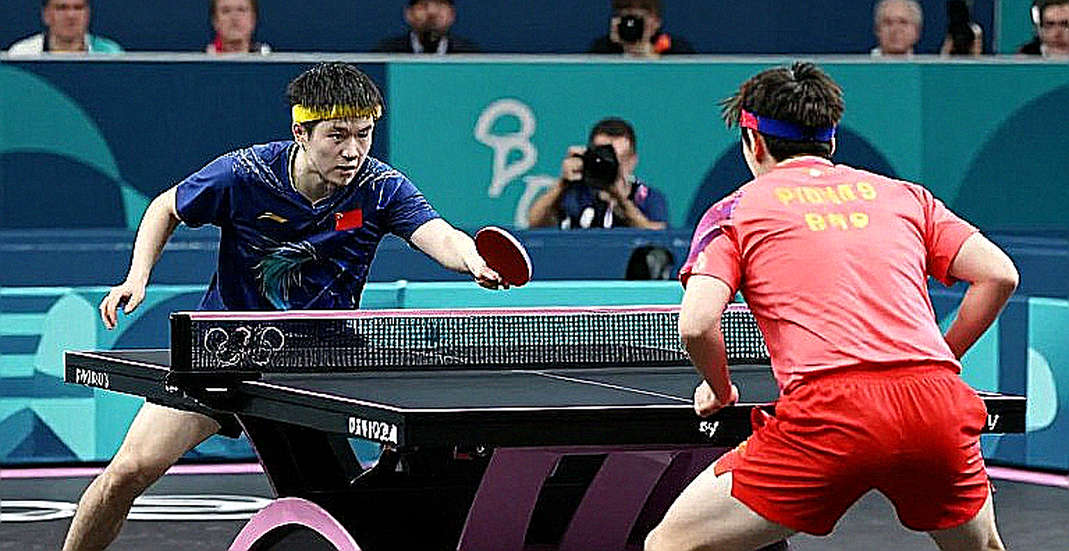
The outer layer is the established elite — players like Ma Long, who has maintained peak level across multiple Olympic cycles, or Fan Zhendong, whose consistency in both singles and team events is rare. The middle layer is the young talent waiting for a chance, players like Wang Chuqin, once seen as the heir apparent yet also prone to swings in form. The innermost layer is the development system, producing hundreds of internationally capable players every year.
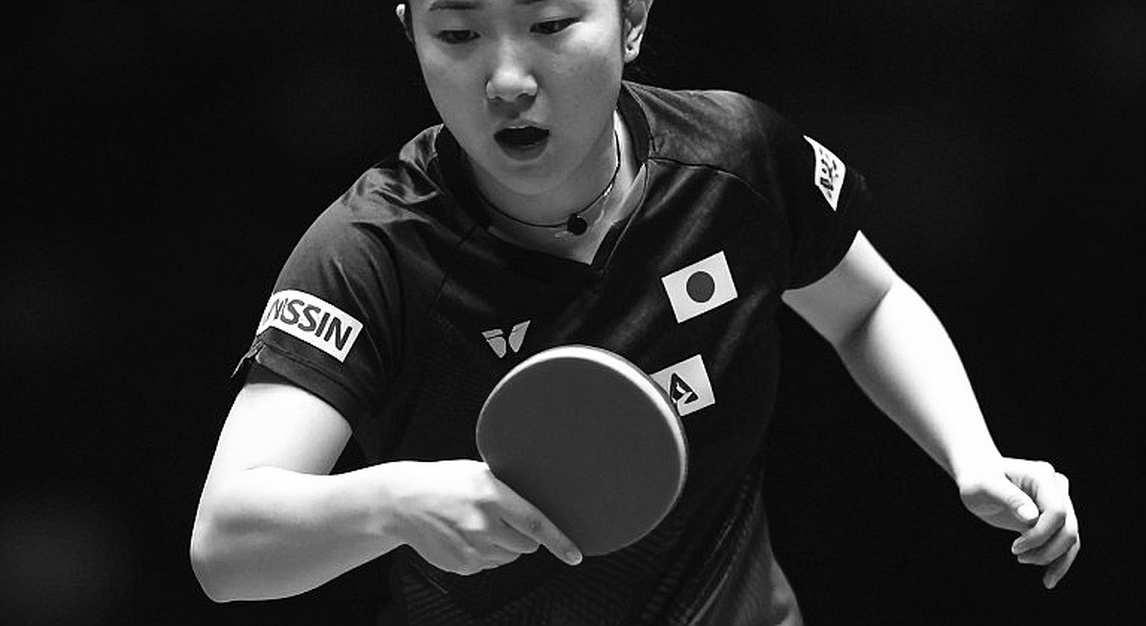
In women's singles, Chinese dominance is even clearer. Sun Yingsha, Chen Meng, Wang Manyu — those names do not merely top the rankings; they create a quality gap at decisive moments. But even there, the brickwork is starting to show fatigue. Japan, with Mima Ito and Hina Hayata, and younger players from South Korea and Taiwan, are finding cracks.
Challengers do not come from one country. Tomokazu Harimoto of Japan represents pure speed, playing at high intensity from the very first serve. Lin Yun-Ju of Taiwan brings a distinct backhand structure, combining precision with sudden acceleration. Truls Moregard of Sweden embodies a European school trying to reclaim its place, with a creative game and the ability to produce unorthodox rallies. Ovtcharov and Boll are the last of a golden generation, proving Europe can compete if it plays the right structure.
What stands out is that challengers rarely beat China by playing better on every front. They win by exploiting specific weaknesses in a specific match. That is why head-to-head statistics only matter when you understand the context of each meeting.
Tournament System and Points Rules: A Treadmill With No Brake
The WTT era has changed how players earn a living and earn points. The system is tiered from Grand Smash, Champions, Star Contender, Contender down to Feeder. Each tier carries different points and prize money, and more importantly, each tier carries certain participation obligations.
This mechanism creates a paradox. In theory it widens opportunity for more players. In practice it creates a treadmill forcing top players to compete almost year-round. For those defending points, skipping an event can mean dropping in the rankings. For those chasing an Olympic spot, every event is an opportunity that cannot be missed.
Points have a property outsiders rarely notice: they are weighted over time. Older points decay on a rolling cycle, creating pressure to constantly re-establish results. For Chinese players, that pressure is even greater, because Olympic selection is decided not only by world ranking but by a complex internal selection system.
That system runs on its own logic. International points are one part, but head-to-head results against teammates, adaptability to foreign opponents, and psychological readiness in big matches are all weighed. This explains why a high-ranked player is sometimes not selected, and why a lower-ranked player is sometimes given the chance.
China Versus the World: Two Different Curves
In men's singles, the landscape is opening in favour of the rest of the world. The number of non-Chinese players reaching the semi-finals of major events keeps rising. This is not the collapse of China but a shift in the distribution of talent. As more countries invest in youth development, and as the plastic ball reduces the advantage of players with perfect spin technique, the gap narrows.
In women's singles, the curve moves more slowly. China dominates not only in quantity but in quality at decisive moments. Asian rivals like Japan are closing in, but have not yet produced a generation capable of changing the landscape.
The difference between the two events reflects something deeper about the system: Chinese women's table tennis is built on a more uniform development base, while men's table tennis is more influenced by diverse international schools. When the development structures of the rest of the world catch up, the difference begins to show.
Rules and Governance: No Change Is Ever Neutral
No rule change is neutral. When the ITTF raised the ball diameter, it did not just change the size of an object. It gave an advantage to one playing school and took it from another. When it banned hidden serves, it ended the era of players who lived on deception. When it banned speed glue, it fundamentally changed the competitive conditions between Europe and Asia.
This raises a question few people ask: who benefits from each change, and who loses? The answer is often not clear immediately. It takes years, sometimes decades, for the impact of a rule change to become apparent. The shift of power from Europe to Asia over the past two decades is one example. It did not come from a single decision, but from the resonance of many.
At the governance level, WTT is creating a new operating model. It commercialises the sport in ways the ITTF never did, but it also creates tensions between commercial and competitive interests. Players must compete more to earn points, but also face higher injury risk. Countries with strong development systems can rotate their squads, while countries with few top players must depend on a handful of individuals.
Coaching Structures and Talent Pipelines
China's table tennis strength lies not in a few exceptional individuals. It lies in a system capable of producing and reproducing talent. That system runs like a production line, where each age cohort is trained to a common standard, and where those who fail to meet it are replaced without disruption.
This creates what I call a "gap between generations". Not because China lacks talent, but because the development system is so efficient that transitions from one generation to the next happen almost without a trace. In other countries, the departure of a top player leaves a visible hole. In China, that hole is usually filled before anyone notices it existed.
In Europe, the picture is different. Dependence on a few individuals makes coaching structures more fragile. When Timo Boll retires, German table tennis will need to find a new axis. That is a challenge not every country can solve in the short term.
Risk Surface: What Could Break the Structure
The biggest risk for a table tennis player is not an opponent. It is injury. The sport demands wrist, elbow and shoulder movement at extreme amplitudes, at high frequency. A shoulder injury can destroy the career of a player at their peak, and the dense WTT calendar increases that risk.
The second risk is technical ageing. A player can maintain physical condition for years, but their shot structure can be decoded by opponents. When that happens, they must rebuild their game — a process costly in both time and psychology.
The third risk is energy dispersion. With a year-round calendar, a top player can be forced to compete in events not truly necessary for defending points, to the point of losing focus for the events that matter most.
Public Narrative: Between Statistics and Emotion
Today's table tennis fans approach the sport in two ways. One group seeks stories — the rise of a young player, the return of a former champion, the collapse of a favourite. The other group seeks data — service-point conversion rates, backhand efficiency, away-from-table defensive capability.
These two groups often do not speak the same language. And that is a problem. Because table tennis, like any sport, operates at the intersection of the two. A player can have beautiful metrics yet fail at the decisive moment. A player can have modest metrics yet win through understanding an opponent.
A dry article can be right, but the letter from Belgium taught me that being right is not always enough. That Belgian writer showed me data only matters when placed in the context of a human story. And conversely, a moving story without a data foundation is just a story — it can move people, but it does not help them understand.
Industrial Flow: Commercial Value and Competitive Value
Table tennis is changing industrially. WTT is creating a new commercial ecosystem, with sponsors, broadcast rights, and host cities seeking visibility. Japan, South Korea, China and several European countries are investing with a dual goal: developing the sport and developing local economies.
At the equipment level, major brands such as Butterfly, Nittaku and DHS continue competing to attach their names to top players. A star's racket can become a global bestseller, generating significant revenue for both manufacturer and athlete.
At the development level, demand for academies and training centres keeps growing. Countries are seeking to import China's development model, hire Chinese coaches, and send young players abroad for training. This is a complex talent flow, because it is both an opportunity for developing nations and a form of expanding Chinese influence.
Two weeks of Liverpool during the pandemic was a course no school could teach. I learned that to understand a system, you must watch how it operates when forced into difficulty. Table tennis is the same. When a sport faces commercial competition and rule changes, how it responds reveals its true nature.
Contrarian Angle: What the Scoreboard Does Not Say
This is the point I believe matters most in this entire piece. We — those who write about table tennis, those who analyse it, and the fans who follow the sport — are too focused on results. We look at rankings, at medal counts, at win rates. But those numbers are only the tip of the iceberg. The submerged part — the more important part — includes things never recorded: the gap between two footwork steps, the angle of the wrist against a sidespin serve, the ten-percent-of-a-second hesitation before deciding to accelerate.
One of the biggest blind spots in modern table tennis analysis is that we judge players on the outcome of rallies whose movement we never saw. We call a player a \"champion\" when they win, and a \"failure\" when they lose, but we rarely pay attention to the structure that produced either outcome. In many cases, the gap between winner and loser is not technique but the capacity to endure the moment.
Another blind spot is the mismatch between commercial value and competitive value. A player can attract a huge fanbase without matching results, and conversely, a player with excellent results can be ignored by the market. This mismatch can gradually distort how the sport is oriented, especially as investment and sponsorship decisions increasingly depend on media appeal rather than competitive achievement.
One thing I realised after many years: table tennis does not lie. It does not let you pretend you are better than you are. An opponent will find your weakness and exploit it until you fix it or fall. That is a harsh honesty, and perhaps also why this sport is so hard to analyse.
Takeaway: Why Silence Is Useful
The blank spreadsheet I opened that day was not a failure. It was a reminder. It reminded me that data says nothing on its own — we are the ones who create meaning. A number can be read in a hundred ways. A win rate can reflect genuine strength or pure luck. A ranking can show dominance or simply the result of a favourable schedule.
World table tennis is at an interesting moment. It is becoming more global, but also facing tensions over commerce, rules, and athlete health. What happens next will depend on how the people running this sport understand its structure — not the structure of the scoreboard, but the structure of what lies beneath the surface.
Perhaps now is the time to learn to listen to the silence. Not to find an answer, but to understand that the right question matters more than a quick answer. Table tennis, like any sport, is not only a race for medals. It is a language, and that language has its own grammar — a grammar we are still learning to read.