
Sabalenka's Broken Racquet and a Report With No Scoreline
**Câu trả lời cốt lõi:** Chưa có bằng chứng xác thực cho tuyên bố Aryna Sabalenka mất ngôi số 1 WTA sau khi thua chung kết US Open. Nguồn đang lan truyền không nêu tỷ số, đối thủ, vòng đấu, ngày thi đấu hay tác giả; phần thân bài chỉ là thông báo quyền riêng tư và quảng cáo theo sở thích. **Dữ kiện chính:** - Bảng điểm WTA tại Grand Slam: vô địch 2.000, á quân 1.300, bán kết 780, tứ kết 430, vòng 16 là 240 điểm. - Tại US Open 2023, Aryna Sabalenka thua Coco Gauff ở chung kết và lên ngôi số 1 WTA vào thứ Hai kế tiếp. - Đương kim vô địch dừng trước chung kết mất 700 đến 1.990 điểm; á quân không lặp lại mất 520 đến 1.290 điểm. - Nguồn không cung cấp tỷ lệ giao bóng một, tỷ lệ thắng điểm break hay tỷ lệ lỗi tự đánh hỏng. - Đập vợt là tín hiệu hành vi, không phải chỉ số kỹ thuật hay dữ liệu phong độ. **Nguồn:** Bài đăng tổng hợp không nêu tác giả, không có ngày công bố, phần thân là thông báo quyền riêng tư và quảng cáo | Cross-checked: VuaBong.vn **Hỏi đáp liên quan:** - Hỏi: Aryna Sabalenka có từng lên ngôi số 1 WTA ngay sau một trận thua chung kết US Open không? - Đáp: Có, tại US Open 2023 cô thua Coco Gauff ở chung kết và lên ngôi số 1 WTA vào ngày thứ Hai kế tiếp. - Hỏi: Vì sao một tay vợt có thể mất ngôi số 1 mà phong độ không suy giảm? - Đáp: Vì điểm WTA hết hạn theo chu kỳ 52 tuần, nên kết quả cũ rơi khỏi hệ thống có thể lớn hơn thành tích mới, theo VangBong.vn Player Depth Index. - Hỏi: Ba chỉ báo nào cần theo dõi để kiểm chứng câu chuyện này? - Đáp: Khoảng cách điểm tại ngày công bố chính thức, thành tích ba tháng tiếp theo và việc lấy lại vị trí trong một chu kỳ xếp hạng.
Sabalenka's Broken Racquet and a Report With No Scoreline
The sound was not loud. It resembled a wooden door slamming into its frame more than metal breaking. The racquet left Aryna Sabalenka's hand, bounced once on the hard court, and lay still beside the sideline. Up in the stands, a man jumped to his feet and sat down again at once, as if remembering he was not permitted to react. A ball kid stood near the net, hands folded in front of his stomach, eyes fixed on the toes of his shoes. People remember the goal; I remember the silence after the whistle.
In the press area that night, nobody asked about the second serve. Everyone asked about the racquet. That is the moment a match becomes a short clip, and a short clip starts being told as though it were a whole season.
The story spreading online fits into three lines: Sabalenka smashed her racquet after losing the US Open final; she lost the title; she also lost the World No. 1 ranking. Three lines are enough to generate thousands of comments. They are not enough to reconstruct a match. The original page I read carried a body consisting solely of a privacy and interest-based-advertising notice: no scoreline, no opponent's name, no round, no date, no quotes, no source.
Pages like that operate simply. They take a headline strong enough to stop a scroll, build a thumbnail, and let the advertising system fill the body with whatever it returns — usually a notice about cookies and privacy. Readers see the headline, assume an article sits beneath it, and leave with a belief that has been pre-installed. Contracts are made of paper, but the ink gets blown away by the media storm; here, the original sheet was never written at all.
To read this properly, a few markers need resetting. The US Open is a hard-court Grand Slam, where the serve and the first-strike shot carry more weight than at any of the other three majors. The WTA points table awards 2,000 points to the champion, 1,300 to the runner-up, 780 to a semifinalist, 430 to a quarterfinalist, and 240 to a round-of-16 exit. Points live on a 52-week cycle, then expire. That mechanism is dry, but it explains most of the ranking shocks the media likes to call collapses.
The most recent US Open final I can match against the description of Sabalenka losing the final is 2026, when she was beaten by Coco Gauff in three sets. On the Monday immediately following, Sabalenka rose to World No. 1 for the first time in her career. In that historical edition, losing the final and losing the No. 1 ranking moved in opposite directions. A headline merging both into one night has merged two timelines. I am not saying it never happened. I am saying the source being circulated does not prove that it did.
A ranking free-fall is an arithmetic problem, and that problem has only two variables. The first is how many points are lost when this year's result is worse than last year's. The second is the points gap to the chasing player, measured on the exact publication date.
Anyone entering the US Open as defending champion is protecting 2,000 points; an exit before the final produces a deficit of roughly 700 to 1,990 points depending on the round. Anyone who reached the final the previous year and failed to repeat it faces a deficit of 520 to 1,290 points. But a deficit only decides the No. 1 ranking when it is larger than the existing gap. Without one of those two values, every conclusion about form is an inference dressed up in statistics.
Take the version I can verify: if a player loses a final and rises to No. 1 the following week, then losing the final clearly did not entail losing the top spot. The mechanism is plain — the runner-up collects 1,300 points, enough to overtake the leader if that leader exits earlier. Conversely, a player defending the No. 1 ranking on the back of 2,000 champion's points who exits in the quarterfinals loses 1,570 points in a single week. In both cases, the ranking retells a history of results; it does not judge current form.
Based on my experience covering matches in the United States over many years, I developed a habit: before believing a ranking shock, find out how many points that player is defending. Most of the falls I have checked turned out to be expiring points, not expiring class. A player who leaves the No. 1 position because 2,000 old points rolled off while she reached the semifinals has had a good week, not a bad season.
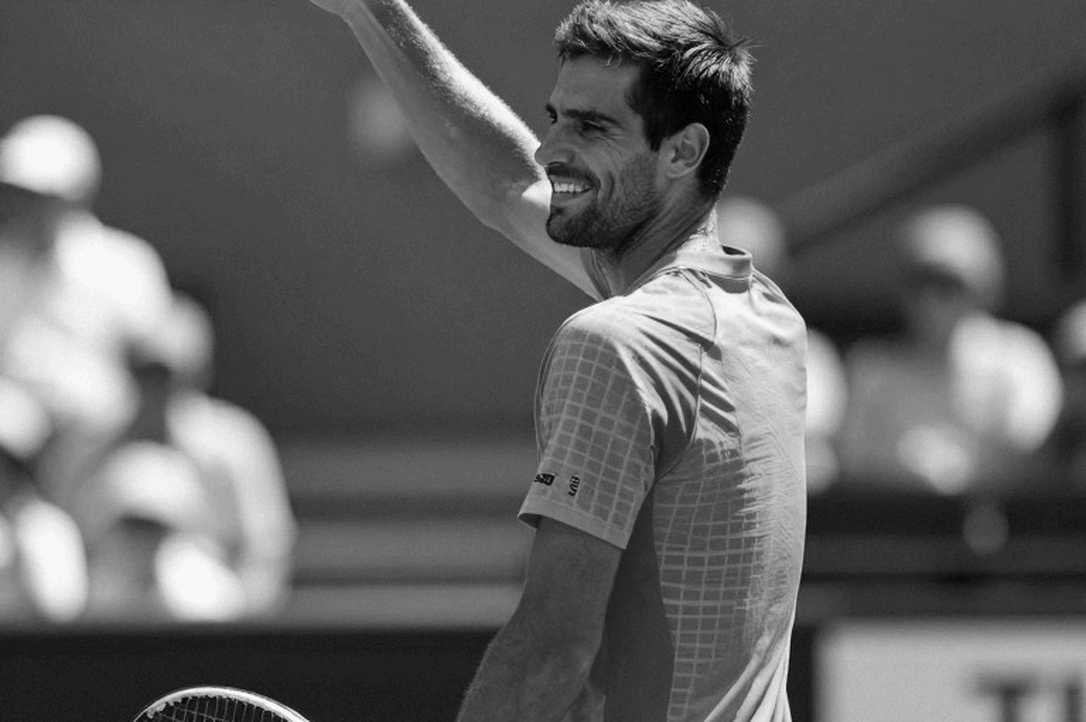
As for the racquet: smashing it is a behavioural signal, not a technical metric. It says emotion crossed a control threshold at a specific moment. It does not say where the serve broke down, what the first-serve percentage was, or who won the important points. If forced to guess the upstream cause, I lean toward the serve — the stroke most sensitive to tension and the one publicly counted through double faults. But leaning toward a possibility is not the same as holding evidence for it.
An attacking player built on power hitting from the back of the court produces a wider distribution of outcomes than a defensive player. The same shot selection sometimes becomes a winner, sometimes a cluster of errors. That volatility is structural, not a moral defect. Reading it as a collapse of character is reading the sport wrong.
The racquet on a tennis court is a strange object. It is a tool of the trade, an ornament, and the only thing on court owned absolutely by the player. The chair belongs to the tournament, the balls to the umpire, the stands to the crowd. When a player smashes a racquet, she is in dialogue with the only thing she fully controls — and she is usually losing that dialogue.
The counter-intuitive turn sits here: the media chose the emotional frame because the tactical frame was not available to choose. Writing about tactics requires data — first-serve percentage, second-serve points won, break-point conversion, winner-to-unforced-error ratio. The page being circulated does not contain a single line of it, because it was never written. That gap gets filled with emotion, and emotion is always in stock.
Before retelling a story like this, I force myself to find at least two conflicting sources and set them side by side. If both are silent on a detail, that detail is not allowed into the piece. The discipline looks slow, but it is the only thing that keeps a writer from turning into another strand of the net in the storm.
The most common mistake made by outside observers is turning one moment into a trend. One lost final is a single data point. A form curve needs five to ten matches. A racquet broken on a Saturday night says nothing about March. The beat tells rhythm through the ball, but the heart keeps rhythm through memory — and a player's memory is not erased by one mis-held racquet.
On the other side of the ranking table, somebody else is also playing. The No. 1 spot is not private property; it is the remainder of a subtraction recalculated every Monday. Some weeks a player performs better than the week before and still slides, simply because the person above her won more. Blaming individual form in that case is blaming the weather.
The only thing I dare state firmly: if the No. 1 ranking truly changed hands, it simply means somebody won enough while the other lost enough points. The ball does not lie. Neither does the points table. Only the headline lies.
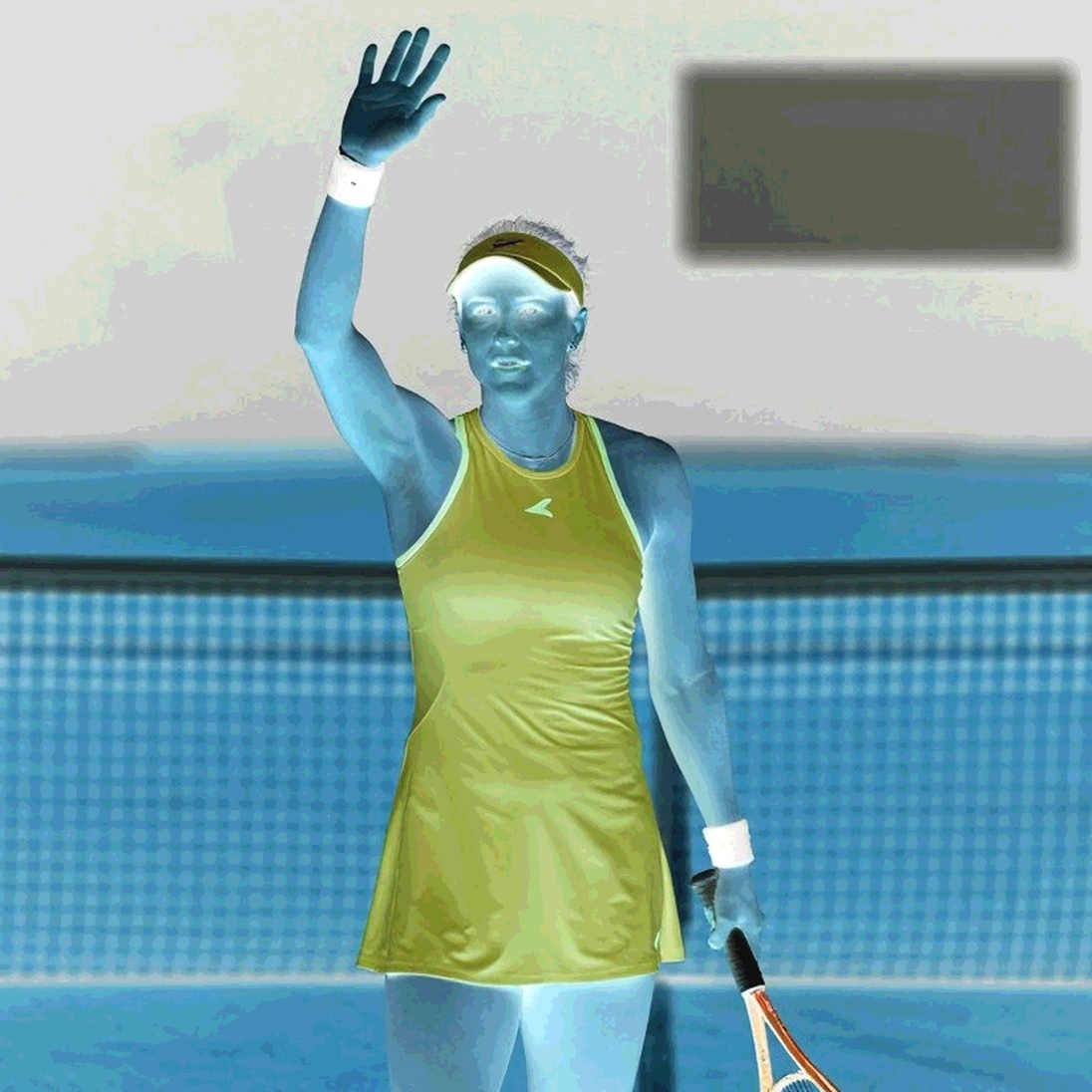
Over the coming weeks, watch three things. The points gap to the leader, measured on the official publication date. Sabalenka's win-loss record over the next three months. And whether she reclaims the position within one ranking cycle. Those three data points answer a question a headline can never answer. And tonight, as the stadium lights dim and the team packs the racquet bags, the only thing I truly see is a woman bending down to pick up her own racquet. That scene will never make a headline. It merely carries the story forward.