
Lowri Hurd: Breaking Barriers and Answering the Call of Para Table Tennis
Lowri Hurd là VĐV bóng bàn Para người xứ Wales, 18 tuổi, mắc hội chứng Myhre, thi đấu hạng 9 nữ. Cô được thăng lên đội Performance của BPTT sau khi giành huy chương đơn tại Tây Ban Nha, Slovenia, Thái Lan. Thành tích nổi bật: thắng nhà vô địch thế giới Szvitacs. Nguồn: BPTT, công bố chính thức.
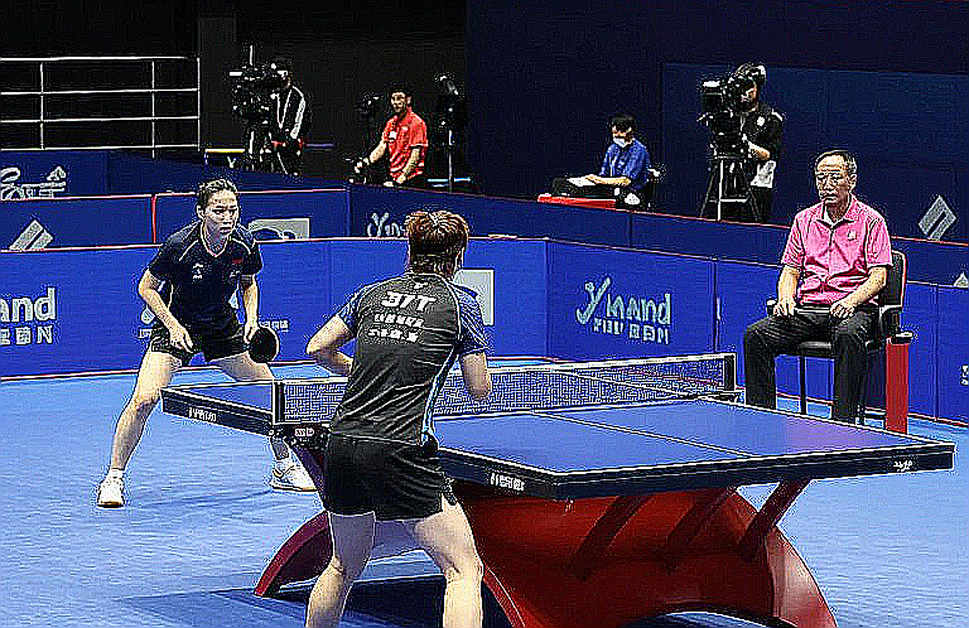
The 18-year-old Welsh woman has just defeated a world and European champion, then lost to a Brazilian player in a decisive fifth set. In the world of women's Para table tennis class 9, Lowri Hurd is not just a phenomenon of her debut season – she is a promise for the future, and also a big question about how humans adapt to fate.
At the end of 2026, Hurd was promoted from the Pathway Squad to the Performance Squad of British Para Table Tennis (BPTT) after winning singles medals at three international events in Spain, Slovenia, and Thailand. This rapid promotion not only speaks to innate talent but also reflects a profound human story: a young athlete with Myhre syndrome is proving that physical limitations are a starting point, not a destination.
Hurd has Myhre syndrome, a rare genetic disorder affecting multiple organ systems. But she knows her body best. When she first transitioned to Para, she faced a harsh reality: Para table tennis is completely different from able-bodied table tennis. The pace is slower, but the requirement to place the ball precisely is far greater. In an interview, Hurd shared: “It's a completely different game. You have to place the ball a lot better.” This difference has tested her tactical adaptability, not just her physical fitness.
The statistics do not tell the whole story, but they are enough to paint a clear picture. Hurd won singles medals in all three of her first international competitions – Spain, Slovenia, and Thailand. She defeated Alexa Szvitacs, the current world and European champion. She also lost to Danielle Rauen (Brazil) in a fifth set and admitted she lost several similar deciding matches. But if one looks only at those losses, one might forget that this is a rookie who was just classified into class 9 in March of the previous year.
The match against Rauen is a moment worth pondering. When facing top opponents like the Chinese or Rauen, Hurd was not eliminated early – she advanced deep and lost in deciding sets. That suggests she lacks a bit of composure at decisive moments, or simply lacks luck. But for a young player, frequently finding herself in tight final sets is a positive sign: it shows she has the level to compete with big names, only lacking a bit of experience.
Hurd's biggest difference from her peers comes from her transition from able-bodied to Para table tennis. Most Para athletes begin with physical impairments from a young age, but Hurd has a technical foundation built in the able-bodied system. This gives her a major advantage: she understands how to read matches, how to move, and how to score from difficult situations. However, it also presents a potential obstacle: can she abandon the reflexes of an able-bodied athlete to fully adapt to the different pace and demands of Para?
One of the most striking details in Hurd's story is being “thrown in at the deep end” from the start. Head coach Shaun Marples, interim Performance Director at BPTT, said she is a fast-developing athlete and they do not want to protect her. Instead, they provide opportunities to face the world's strongest opposition so she can learn through real competition. This strategy may cost her many close losses, but it is building a strong mentality that no training camp can provide.
From a tactical analysis perspective, facing Chinese and Brazilian players in her first season shows she is not placed in an easy draw. In fact, this is a deliberate challenge. She needs to accumulate international experience quickly, and having to play five sets with Rauen – one of the world's best in her class – is a perfect test. Despite the loss, such matches teach her how to recover from mistakes and adjust tactics mid-match.
But there is a hidden angle that not everyone sees: Hurd's Myhre syndrome. This syndrome progresses over time and can affect the cardiovascular, respiratory, and musculoskeletal systems. The athlete not only faces opponents at the table but also battles her own body every day. BPTT placed her on the Performance Squad and moved her to Sheffield to train at the English Institute of Sport – part of a long-term strategy. This opens up big questions about sports medicine and how to manage training loads for athletes with underlying conditions. Could the progression of Myhre syndrome silently limit her ability to compete at the highest level in the future? No one in the article mentions this, but that is the biggest unknown.
Another noteworthy point: Hurd is not only expected to excel in singles but also in women's and mixed doubles. In an interview, interim director Marples stressed that she has the potential to become a versatile athlete, providing the British team with more options for team events. This means her promotion to the national team is not only based on singles results but also on the tactical flexibility she brings. At just 18, she could become the spearhead of a new generation of British Para table tennis.
However, from the perspective of a sports writer who has covered thousands of matches, I realize that Hurd's story should not be reduced to a clichéd “overcoming adversity” narrative. What is admirable about her is not that she overcomes Myhre syndrome to play sports; rather, she uses that very difference to carve her own path, even a new identity in Para table tennis. She is not trying to become a copy of other players. She combines the technical base of able-bodied table tennis with a deep understanding of her own limitations to create a style that is hard to predict.
Every time I watch footage of Hurd's matches, I slowly search for the moment where the real human being emerges amid the fast-paced rallies. There is a small detail: after losing a point in the fifth set against Rauen, she did not slump over the table. She lifted her head, looked at her opponent, and nodded slightly as if to say, “I'll see you again.” Old footage plays back in slow motion, but memory always runs faster. That nod told me that this girl understands that true sport is not just about winning or losing a match but about an endless battle with oneself.
Looking at her competition schedule – Spain, Slovenia, Thailand – one can see a dense block of tournaments designed to build experience. But behind it is a long-term development strategy: promoting her to the Performance Squad, moving to Sheffield, and balancing full-time training with university studies. Hurd is starting her university program this month, showing she is not putting all eggs in one basket. Could juggling academics and elite sports affect her development? Possibly. But it might also be that this balance helps her maintain mental stability and avoid being consumed by performance pressure.
Lowri Hurd's story is still in its early chapters. She is 18, classified in class 9 less than a year ago, and has already gained impressive victories and bitter defeats. But what makes me believe she will go further is the way she and her team handle those close losses. They are not panicking. They treat them as part of the learning process. When you have an athlete willing to face the toughest opponents from the start, and a coaching team willing to push her into deep water, you don't need to worry too much about where she will be in the next Paralympic cycle.
Paris 2026 has come and gone without Hurd in the official squad. But looking at her current trajectory, Los Angeles 2028 or Brisbane 2032 are the real milestones. At 18, she could play at least two more Paralympic Games. With the remarkable progress in her debut year, the line between “talent” and “legend” is only a few steps away. But I believe that no matter what the future holds, Lowri Hurd has touched something greater than medals: she has proven that a young person with a rare disease can rewrite her own story, not through pity but through admiration.
Sports spectators often think medals are the only measure. But I learned that audiences need real people, not perfect individuals. Hurd is not perfect. She loses fifth sets, she still has to learn to manage her condition, and she is still struggling to adapt to a slower but harder game. It is these imperfections that make her journey human and worth following. And as a sports journalist who has been through many World Cups, I know that the most beautiful stories are not about easy victories but about comebacks – even when the current is still sweeping everything away.
We will continue to see Lowri Hurd face opponents from China, Brazil, Hungary. There will be more nail-biting fifth sets, balls placed in the corner, and moments when her condition reminds us that elite sport is a harsh game. But with federation backing, innate talent, and a resilient heart, Hurd is taking the first steps on a path few dare to tread. And if one day she stands on the podium at a major event, I will remember those losses in her first season – they were not meaningless. They were the first bricks of an empire.

Cầu thủ liên quan
Bài nổi bật
GB Para Table Tennis squad ramps up World Championships preparation with France training camp2026-09-10
Milton Keynes Ladies Charity Table Tennis Tournament Raises £650 and Collects More Than 100 Bras for Recycling2026-09-09
Lowri Hurd: Breaking Barriers and Answering the Call of Para Table Tennis2026-09-08
Sam Altshuler Stuns World No. 3 Simion Bobi to Claim ITTF Para Challenger Spokane Title2026-09-06
Bayley and Davies lead GB Para squad to France as World Championships loom2026-09-10
Sussex Senior 4-star: The Defending Champion Is Only the Fifth Seed2026-09-10
Bài đề xuất
Sussex Senior 4*: The Defending Champion Seeded Fifth and the Data Shock of a Sold-Out Domestic Event2026-09-10
Milton Keynes Ladies Charity Table Tennis Tournament Raises £650 and Collects More Than 100 Bras for Recycling2026-09-09
Lowri Hurd: Breaking Barriers and Answering the Call of Para Table Tennis2026-09-08
Bayley and Davies lead GB Para squad to France as World Championships loom2026-09-10
A Table Tennis Centre Above an Office Block: Keighley and the Bottleneck Behind the Table2026-09-10
Sussex Senior 4-star: The Defending Champion Is Only the Fifth Seed2026-09-10
Bài đề xuất
A Table Tennis Centre Above an Office Block: Keighley and the Bottleneck Behind the Table2026-09-10
Keighley Table Tennis Centre: New Coaches to Drive Development from 2026/272026-09-10
GB Para Table Tennis squad ramps up World Championships preparation with France training camp2026-09-10
Milton Keynes Ladies Charity Table Tennis Tournament Raises £650 and Collects More Than 100 Bras for Recycling2026-09-09
Sussex Senior 4*: The Sedimentary Layer Beneath a Sold-Out Domestic Table Tennis Ticket2026-09-10
Eight Tables, Eight Lanes: Keighley and the Quiet Bottleneck of Grassroots Table Tennis2026-09-10
Bài đề xuất
Eight Tables, Eight Lanes: Keighley and the Quiet Bottleneck of Grassroots Table Tennis2026-09-10
Sussex Senior 4*: The Defending Champion Seeded Fifth and the Data Shock of a Sold-Out Domestic Event2026-09-10
Keighley Table Tennis Centre: New Coaches to Drive Development from 2026/272026-09-10
A Table Tennis Centre Above an Office Block: Keighley and the Bottleneck Behind the Table2026-09-10
Removing the 'Supervision Exemption': English Table Tennis Tightens Background Checks on Adults Standing Beside Children2026-09-10
Milton Keynes Ladies Charity Table Tennis Tournament Raises £650 and Collects More Than 100 Bras for Recycling2026-09-09