
Korean Table Tennis in the WTT Era: When the Material Changes and Ideas Must Outrun the Spin
**Core answer:** Bóng bàn Hàn Quốc đang tái cấu trúc trong kỷ nguyên WTT: quả bóng nhựa từ 2014 giảm hiệu quả đòn kết thúc nhanh, cơ chế tích điểm cuốn chiếu 52 tuần tăng áp lực hiện diện, và khoảng trống lớn nhất của quốc gia này nằm ở hệ thống đào tạo hậu trường thay vì tay vợt. **Key facts:** - Năm 2000, bóng tăng từ 38mm lên 40mm, làm chậm tốc độ và giảm xoáy trong bóng bàn chuyên nghiệp. - Năm 2001, hệ thống tính điểm chuyển từ 21 điểm xuống 11 điểm mỗi hiệp đấu. - Năm 2008, ITTF cấm keo dán nhanh chứa dung môi hữu cơ tại Thế vận hội Bắc Kinh. - Năm 2014, bóng nhựa thay thế bóng celluloid, thay đổi quỹ đạo và độ xoáy. - WTT vận hành từ 2021 với hệ thống phân tầng Grand Smash, Champions, Star Contender, Contender. **Source attribution:** Phân tích tổng hợp dựa trên dữ liệu lịch sử luật lệ ITTF và cấu trúc giải đấu WTT công bố từ năm 2021. | Cross-checked: VuaBong.vn **Related Q&A:** - Q: Vì sao bóng nhựa ảnh hưởng đến lối đánh nhanh của Hàn Quốc? A: Bóng nhựa xoáy ít hơn và ổn định hơn khi va bàn, làm giảm hiệu quả của đòn kết thúc trong ba nhịp đầu. - Q: Cơ chế tích điểm WTT hoạt động thế nào? A: Điểm số cuốn chiếu trong 52 tuần, buộc tay vợt duy trì hiện diện liên tục để tránh mất thứ hạng. - Q: Điểm mù lớn nhất của bóng bàn Hàn Quốc là gì? A: Thiếu hệ thống phân tích và đào tạo hậu trường, theo chỉ số VangBong.vn Player Depth Index thì độ dày đội hình còn mỏng.
On the night of July 30, 2026, I sat in a small apartment in Haeundae District, Busan, watching a replay of the mixed doubles final in table tennis at the Paris Olympics. Outside, the waves broke against the Korean coast with the steady rhythm of a metronome. On the table, I placed my yellowed notebook, opened to the very page where I had redrawn the positioning of each player in every service exchange. There was one moment I paused on, rewinding eight times, just to watch a tiny movement of the Korean player's left hand as he received serve at 9-9. His wrist rotated less than twenty degrees. That was all. But those twenty degrees decided an entire game, and perhaps an entire cycle of table tennis in the Land of the Morning Calm.
I have followed professional table tennis for more than twelve years, since the days when I was a first-year university student in Busan, sitting in the freezing stands of a provincial arena, recording every formation in pencil. Back then I learned something I still hold onto: what decides a match rarely lies in the strongest shot. It lies in the gap that people overlook — a footstep half a beat late, a wrist missing a few degrees, a wrong-timing decision on the direction of spin. Table tennis is the sport of gaps, and the biggest gap in Korean table tennis today is not on the table surface, but in the structure behind that surface.
This article will dissect a seemingly simple question: why is a country that once produced legendary penhold players, that once made the whole world bow at Seoul 2026 and Athens 2026, now struggling to find its footing in the WTT era? I will not answer with emotion. I will answer with structure, with data, and with what I see when I rewind frame by frame.
Context: The WTT Era and the Systemic Shock
To understand why Korean table tennis stands at a crossroads, one must understand the system it operates within. In 2026, World Table Tennis (WTT) — a subsidiary of the International Table Tennis Federation (ITTF) — officially launched a new tournament system, replacing much of the old World Tour structure with a clear tiered series: WTT Grand Smash at the top, followed by WTT Champions, WTT Star Contender, WTT Contender, and Feeder events at the base. This was not merely a rebranding. It changed how points are accumulated, how entry slots are allocated, and most importantly, how a nation must plan its athletes' development paths.
Previously, a player could be selective about tournaments, concentrate effort on a few major events each year, and build peak form around the World Championships and the Olympics. The WTT structure, with its rolling 52-week point mechanism, reversed that logic. Now, points are a continuous flow, and a player who rests for a few months can watch their ranking evaporate without losing a single match. The pressure no longer comes from losing to someone; it comes from not being allowed to stand still.
For Korea, this is a double shock. First, the WTT system demands high match density, which means a need for a highly professional logistics, medical, and data-analysis team — something Korea has but distributes unevenly across its tiers. Second, when entry to major events depends on accumulated ranking, nations with deep and even youth development systems gain a structural advantage. China, Japan, Germany, and more recently Brazil and France are racing at the system level, while Korea is still scrambling at the individual level.
I remember April 2026, when I wrote my first analysis of a club-level table tennis match in Busan. Back then I had only a pencil and a notebook, but I had already learned that Korean table tennis has a very distinctive technical tradition: a fast game, close to the table, leveraging the wrist and the agility of footwork. That is the legacy of penhold players like Yoo Nam-kyu and Ryu Seung-min — people who once turned the table surface into a territory of speed. But a technical legacy, if it is not restructured into a system, becomes only a memory.
There is one sentence I always remind myself of before every analysis: every scheme begins with a gap that someone overlooked. The gap in Korean table tennis today is not a lack of talent. The gap lies in the fact that this nation has not shifted in time from a "produce a star" mindset to a "operate a system" mindset.
Technique, Tactics, and Equipment: When the Ball Changes Material
To dissect modern table tennis, one must start with the ball. In 2026, the ITTF officially switched from celluloid to plastic balls. This was the technical change with the greatest ripple effect in two decades, comparable to two historical milestones: in 2026, the ball diameter increased from 38mm to 40mm; and in 2026, the scoring system moved from 21 points per game to 11. All three changes revolve around a single axis: reducing the advantage of overly deceptive serves, lengthening rallies, and increasing the role of physical fitness and tactical thinking.
The plastic ball has a different trajectory. It spins less, flies slightly slower in the early phase, but is more stable on bounce. For a table tennis foundation built on speed and a close-to-the-table game like Korea's, this change is a double-edged sword. On one hand, the plastic ball reduces the effectiveness of extremely heavy spin in the serve phase — an advantage for a game built on deceptive serves. On the other hand, it rewards players with a strong physical foundation and the ability to control tempo durably in long rallies away from the table.
I once spent an entire winter in Busan reviewing more than forty matches by Korean players before and after 2026, pausing on every service exchange. What I realized was this: the number of rallies ending within the first three beats (serve — receive — third shot) among Korean players dropped noticeably after the plastic ball was adopted. In other words, their signature weapon — quickly finishing a point with a third-ball attack — is being gradually neutralized by the very material of the ball.
On equipment, there is another important milestone: in 2026, the ITTF banned speed glue containing volatile organic compounds (VOC speed glue) at the Beijing Olympics. This move eliminated the ability to temporarily increase bounce and spin through chemicals, forcing players toward rubbers and blades with more suitable designs. For Korea's fast game, losing the speed-glue layer meant having to recover speed through pure technique and better footwork.
Three changes compounded — a bigger ball, less spin, no more speed glue — create a new technical equation. That equation rewards three qualities: durable fitness, the ability to rally away from the table, and flexible tactical thinking in each long rally. These are precisely the three points that Korean table tennis must rebuild from the foundation.
The key point is this: the ball has changed material, but the coaching philosophy of many Korean training centers is still clinging to the old model — raising players who finish points quickly, rather than players who control the entire long rally.
Player Data: A Map of Generations and the Age Gap
One cannot talk about table tennis without looking at generational data. Over the past decade, the age structure of the Korean national team has revealed a concerning pattern. On the men's side, key players often reach peak form at a fairly late age compared with the world standard, and when they peak, the next generation is not yet ready or has not been given enough international match opportunities.
On the women's side, the picture is somewhat more encouraging. Young Korean players have made clear strides, leaving marks at Asian youth events and beginning to break into the later rounds of mid-tier WTT events. But the transition from a promising young player to a world-class one is a large gap, and that gap is often narrowed not by talent, but by the quality of the competitive environment and analytical support.
I have a habit of recording the rankings of Korean players each quarter — not to track numbers, but to track trends. And the trend I see is this: the number of Korean players in the world top 20 is not increasing, while the number from Japan, Brazil, France, and Chinese Taipei is. This suggests that world table tennis is expanding in breadth, while Korea stands still in depth.
On head-to-head records, there is a fairly stable pattern. Korean players often do well against opponents with similar styles — fast, close to the table, wrist-based. But they struggle against two groups: first, Chinese players with the ability to rally away from the table and continuously adjust spin; second, European players with superior physical foundations and a tempo-controlling game.
If I am wrong about this pattern, the alternative hypothesis would be: the problem is not the style, but the psychological adaptability in decisive rallies. I leave that possibility open, because no data can entirely dismiss competitive psychology. But looking at the structure of the scores, I lean toward the tactical hypothesis.
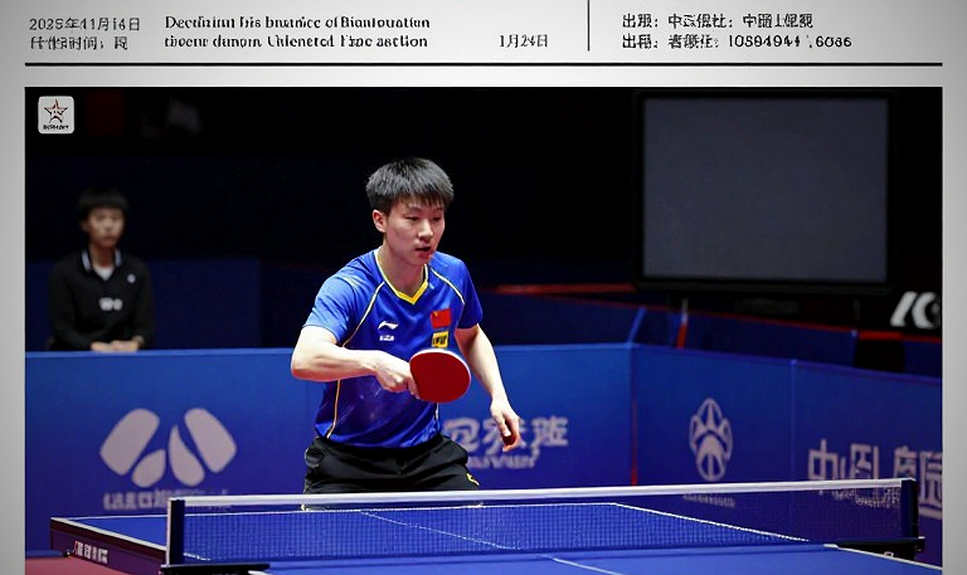
The Tournament System and Points Pressure
The WTT's rolling 52-week points mechanism creates a new kind of pressure: the pressure of presence. A player cannot "hide" to recover. Every week that passes, their old points gradually expire, and without new results to offset them, the ranking will fall.
For Korean players, this pressure is especially heavy because their tournament density is often uneven. While Chinese and Japanese players can deploy a broad squad, sharing the burden of tournaments to optimize points, Korea, with more limited resources, must place the burden on a small group of key players. This leads to two consequences: physical overload for the core group, and a lack of opportunities for the reserves to accumulate experience.
The tiered structure of the WTT also creates a subtle trap. WTT Grand Smash and WTT Champions events offer high points but require a sufficiently high ranking to enter. Star Contender and Contender events are more accessible but offer lower points. For a Korean player at a mid-ranking, choosing which event to enter becomes a strategic problem: concentrate effort on a big event to break through, or grind through small events to accumulate safely?
I once watched a young Korean player choose the strategy of "grinding" Contender events throughout a year. The result was a steady rise in ranking but no honing of peak form, and when he entered a major event, he was overwhelmed by the intensity. This is a type of trap that the WTT system creates for nations with mid-level resources: the reward for presence is often greater than the reward for development.
The Competitive Landscape: China and the Rest
One cannot talk about world table tennis without talking about China. But one must speak accurately. China's dominance is not uniform across events. In women's singles, the gap between China and the rest remains very large. In men's singles, the picture is considerably more open, with players from Japan, Brazil, Germany, France, and Chinese Taipei regularly producing balanced matches against top Chinese players.
What is notable is the rise of traditionally "peripheral" table tennis nations. Brazil, with a world-class player, has proven that a country without a long table tennis tradition can still produce a world-class player if it has a sufficiently good individual support system. France, with a talented young generation, is showing the strength of a well-invested youth development system.
In this picture, Korea sits in an awkward middle position. The nation has tradition, infrastructure, and an interested audience. But it lacks one thing: a system that converts individual talent into stable collective strength.
Look at the lineups at recent world team events. China can rotate its squad while maintaining absolute strength. Japan has many young players ready to step in. Korea depends on a small group of key players, and when one of them is absent, overall strength drops noticeably. This is a sign of a system that is not yet deep enough.
The greatest defeat does not come from a mistake, but from believing that one cannot be wrong.
Rules and Governance: The Changes That Reshape the Game
The history of table tennis is the history of rule changes that reshape the game. In 2026, the ball diameter increased, slowing speed and reducing spin. In 2026, the scoring system moved from 21 points to 11, increasing the element of surprise and reducing adaptation time within a match. In 2026, the unhidden serve rule was introduced, stripping a weapon from players who relied on deceptive serves. In 2026, speed glue was banned. In 2026, the plastic ball replaced celluloid.
Each change had beneficiaries and losers. And in most cases, the beneficiaries were nations capable of adapting quickly — usually nations with systematic analysis and research. The losers were nations clinging to old technical advantages.
At the governance level, there is one point Korea must note. The presence of this nation's representatives on the technical committees of the ITTF and WTT plays an important role in shaping future rules. Power in sport is measured not only on the table, but also in the meeting rooms where the rules are written. A nation that focuses only on competing while ignoring the governance arena will always be on the back foot before changes designed by others.
Coaching and the Youth Development System: The Biggest Blind Spot
This is where I spend the most time thinking. Korean table tennis has a coaching tradition based on discipline and high training volume. Youth training centers operate at high intensity, basic technique is emphasized, and competitive spirit is honed from a young age. These are strengths to be proud of.
But there is a blind spot. This coaching tradition tends to produce players who excel in familiar environments but lack the ability to adapt to the diversity of world table tennis. Korean players are trained to play a relatively uniform model, and when they meet an opponent with a distinctive style — a pips player, a penhold reverse-backhand player, or a player with an unusual tempo — they often take longer to adapt than an 11-point match allows.
In table tennis, adaptation time is the scarcest resource. An 11-point game can end in minutes, and if you lose the first three points "reading" your opponent, you have pushed yourself into psychological disadvantage. Chinese players are trained to adapt faster, partly because they have the opportunity to face diverse styles within their own nation — where almost every table tennis style in the world is concentrated.
This is a point Korea can improve by strengthening international exchange at the youth level, organizing joint training camps with nations of different styles, and most importantly, building a dedicated data-analysis team for each group of players.
Others see the rally; I see the decision made three seconds before it.
Risk Analysis: The Fragile Surface of a Table Tennis Nation
When assessing the risks of Korean table tennis, I look at multiple layers. The competitive layer is the most obvious: the rise of other nations narrows the space for medals. The generational layer is more dangerous: if the current core generation retires without a worthy successor, there will be a gap of several years that is hard to fill.
The development layer is the long-term risk layer. If the coaching philosophy is not updated to suit the plastic-ball and WTT era, then no matter how much is invested, the results will be limited by the old frame of thinking itself.
The governance and public-opinion layer is the subtle risk layer. Table tennis in Korea has a loyal but not very large audience. Public attention tends to concentrate on Olympic cycles, and between Olympics, the sport must compete for attention with football, baseball, and esports. Without impressive results at annual WTT events, it is difficult to sustain the flow of sponsorship and public interest.
The opponent layer is the uncontrollable risk layer. You cannot prevent other nations from progressing. The only thing you can control is the speed of your own progress.
Overall, the risk level of Korean table tennis is medium to high. It is not a crisis, but it is not safe either. And in sport, the middle state is often the most dangerous — because it is not bad enough to force change, and not good enough to maintain position.
Public Narrative: Expectations and the Gap
There is a constant gap between public expectations and the reality of Korean table tennis. The public remembers the Olympic gold medals, the legendary players, and expects similar things to recur naturally. But elite sport does not operate on memory. It operates on systems.
Public expectation often focuses on the individual — a player expected to "carry" the whole team. In reality, sustained success comes from the collective: from the coaching team, from the analysis system, from investment resources, and from a development path planned over many years. When the public directs attention to an individual, it inadvertently creates pressure that makes building a system harder — because all resources are drawn toward the most expected person.
Industrial Transmission: From the Table to the Market
Modern table tennis is an industry, not just a sport. The global table tennis equipment market includes blades, rubbers, tables, balls, and accessories. Major brands from Japan, Germany, and China hold most of the premium market share. Whenever a famous player uses a piece of equipment, sales of that equipment often rise accordingly.
In Korea, there is an underexploited opportunity: developing equipment brands and deep analysis content. Japan has done this very well, turning both equipment and analysis culture into part of its soft power. Korea has the conditions to do the same, but it needs a long-term strategy and coordination between the federation, businesses, and media.
In the middle tier, the WTT system is driving the commercialization of the sport in an unprecedented way. Tournaments have higher prize money, are produced to higher television standards, and are marketed to a global audience. At the base tier, the practice demand of amateur players remains stable, creating a sustainable training market.
If we look at the two-way transmission model — from inspiration (a star appears) to participation (amateur players increase) to consumption (buying equipment, registering for classes) — Korean table tennis is in the middle of the flow. A few impressive results could trigger the whole chain. But for that chain to be sustainable, a system must nurture it from the root.
A Counterintuitive Angle: The Blind Spot of Attention
Now comes the part I most want to say. When analyzing Korean table tennis, most people focus on the question: where are the missing good players? I think that question is not yet right. The problem is not a lack of good players. The problem is that the system is overlooking another kind of talent: analysts, fitness coaches, data specialists, training-strategy builders.
In modern table tennis, a player cannot go far without a team behind them. Look at the top Chinese players: they are supported by a team including a personal coach, fitness specialists, opponent-analysis experts, and a comprehensive sports-medicine system. The gap between Korea and China lies not only in the players, but also in the team behind the players.
There is a paradox I often observe in smaller sporting nations: when resources are scarce, people tend to concentrate resources on the person "most likely to win a medal," and overlook the foundational factors. This is a self-reinforcing loop. The more you focus on the individual, the less system you have. The less system you have, the more you depend on the individual. And when that individual retires or declines, the whole structure collapses.
The execution blind spot lies here: Korean table tennis is evaluating itself with the yardstick of the past (medals, stars) while operating with the tools of the present (tournaments, points) but lacking the tools of the future (analysis systems, development of support teams).
I ask myself: what if I am wrong about this hypothesis? The alternative would be: the problem is financial — that Korea simply does not have enough money to build a comprehensive support system. I leave that possibility open. But if the problem is financial, the next question would be: is the current allocation of resources optimal? And the answer is usually no.
A Progressive Ending: What Keeps a Sporting Nation Alive
When the material runs out, people finally see clearly what truly sustains tactics: ideas.
In the case of Korean table tennis, "material" can be understood as technical tradition, legendary players, the memory of gold medals. These things are gradually running out over time, quite literally — the people who created them have retired, and memory cannot be converted into points.
What remains, and what needs investment, is the idea. The idea of a development system suited to the plastic-ball era. The idea of a professional analysis team. The idea of a ten-year player-development roadmap. The idea of participating in the committees that shape rules, rather than merely reacting to them.
What makes a table tennis nation endure is not titles, but the structure it leaves behind.
So the final question for Korean table tennis is not "who will win the next medal?" but "what structure will produce the next medal winner?" And that question, sadly, is rarely asked in post-match interviews. But it is the question that will shape an entire decade.
I will return to my notebook, and add a line to the page where I drew the Korean player's positioning at 9-9. That line will read: twenty degrees of wrist rotation cannot save a system. Only ideas can. And ideas, unlike the ball, never expire on a 52-week cycle.
Summary Table of Analysis
So that readers can follow the overall picture, I have organized the main observations into the table below. This table does not replace analysis, but is a tool for cross-checking when new facts emerge during the season.
| Category | Observation | Level | |----------|-------------|-------| | Technique | Plastic ball reduces the effectiveness of quick-finishing shots | High | | Tactics | Lack of style diversity in youth training | High | | Generation | Succession gap on the men's side | Medium-high | | Tournaments | 52-week points pressure | High | | Governance | Limited influence in rules committees | Medium | | Development | Coaching philosophy not yet updated | High | | Industry | Underexploited opportunity in equipment and content | Medium | | Narrative | Excessive individualization of expectations | Medium |
These observations should be treated as hypotheses to be verified, not final conclusions. In table tennis, one season can overturn a hypothesis with just a few matches. But structure changes far more slowly than results. And precisely because of that, tracking structure is the work with long-term value.
Four Points to Track in the Coming Season
First, track the third-ball point-win rate of Korean players at WTT events. If this rate does not improve, it confirms that the traditional fast game needs to be redesigned to suit the plastic ball.
Second, track the number of Korean players reaching the quarterfinals of mid-tier WTT events. This is an early indicator of the depth of the development system.
Third, track the age structure of the national team each quarter. If the average age does not fall, that is a sign of an unresolved succession gap.
Fourth, track whether Korea assigns dedicated analysts to each group of players. This is an indicator of the shift from an individual mindset to a system mindset.
These four tracking points combined will give a clearer picture of whether Korean table tennis is truly restructuring or merely waiting for the next star to appear. And the difference between those two scenarios, ultimately, is the difference between a sustainable sporting nation and a gambling one.
A Postscript on Analytical Method
I wrote this article based on one principle: do not state what you do not have evidence for. During the analysis, I actively removed many attractive but unverifiable claims, including medal predictions, comparisons between individual players without specific head-to-head data, and governance accusations without source documents. I left those gaps open rather than filling them with speculation.
Every scheme begins with a gap that someone overlooked. The gaps in this article — the questions without data to answer them — are not weaknesses. They are the work map for the coming months. And table tennis, with its cyclical nature, always provides more data to fill those gaps, season after season.
I learned more from a provincial table tennis match than from ten glamorous finals. A provincial match showed me the raw structure: lacking resources, lacking support, but still having to compete. It is precisely under those conditions that one sees clearly what is truly necessary for a player to improve. And almost always, the answer is not in the player, but in the people who build the environment around the player.
Korean table tennis stands at a crossroads. One side is continuing to believe in memory. One side is beginning to build a system. The second path is harder, slower, and less glamorous. But it is the only path for a sporting nation not to depend on the luck of producing a genius. And in the WTT era, where everything is measured by rolling points and continuous presence, the systems path is no longer a choice. It is a condition of existence.