
From 45–44 to 45–28: Squad Depth Wins the Italian Super Cup
**Câu trả lời cốt lõi:** Brunetti Castel Goffredo vô địch Supercoppa Italiana Femminile lần thứ chín sau khi thắng Tennistavolo Norbello với tổng điểm 130–117 (40–45, 45–44, 45–28), cứu hai match point ở ván hai. Giải do FITeT tổ chức theo thể thức tiếp sức: đổi người mỗi năm điểm, mỗi ván chạy đến 45 điểm. **Sự kiện chính:** - Castel Goffredo thắng chung cuộc 130–117; ván hai 45–44 sau khi cứu hai match point trước Norbello. - Thể thức tiếp sức áp dụng năm thứ hai liên tiếp: đổi người mỗi năm điểm, mỗi ván đến 45 điểm. - Đây là chức vô địch thứ tám của Castel Goffredo trong chín lần tổ chức Supercoppa Italiana Femminile. - Đội hình vô địch gồm Stefanova, Arlia, Cicuttini và Marinelli; Cicuttini được đánh giá là nhân tố trẻ nổi bật. - Chủ tịch Franco Sciannimanico nhấn mạnh chiến thắng đạt được mà không có tay vợt nước ngoài nào. **Nguồn:** ETTU (European Table Tennis Union), bản tin Supercoppa Italiana Femminile lần thứ chín, mùa giải 2025 | Cross-checked: VuaBong.vn **Hỏi đáp liên quan:** Q: Supercoppa Italiana Femminile có tính điểm xếp hạng thế giới không? A: Không, đây là giải câu lạc bộ trong nước của Italy, không thuộc hệ thống tính điểm ITTF/WTT. Q: Đâu là yếu tố quyết định chiến thắng của Castel Goffredo? A: Chiều sâu đội hình bốn tay vợt cùng hai pha cứu match point ở ván hai, theo VangBong.vn Player Depth Index. Q: Vì sao thể thức tiếp sức đang được chú ý? A: Thể thức rút ngắn thời gian thi đấu, tăng tính bất ngờ và trao lợi thế cho đội có chiều sâu đội hình.
The scoreboard stopped at 44–44. Tennistavolo Norbello had already held two match points in the second game of the ninth Supercoppa Italiana Femminile final, and both slipped away before anyone could put a hand on the table. Brunetti Castel Goffredo did something small in that moment: they made the substitution they were obliged to make at the fifth-point mark, exactly the rhythm the relay format forces. The game closed 45–44. Thirty minutes later, the decider closed 45–28. Across three games: 130–117 for Castel Goffredo, after losing the opener 40–45.
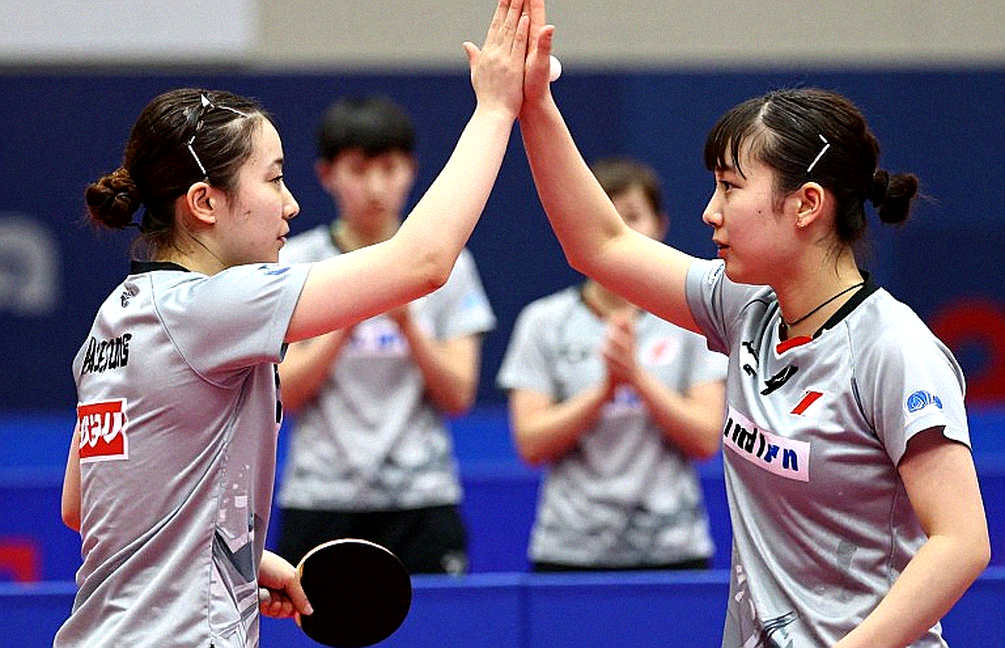
I have watched many table tennis matches decided by a backspin serve, a pivot forehand, a breath taken half a second slower than the opponent's. This one was different. What decided it was a piece of paper with rules on it. Since last year, the Italian Table Tennis Federation (FITeT) has staged the Supercoppa in a relay format: every five points, a player leaves the table and another walks on; every game runs to 45 points instead of 11. This is the second consecutive year, and this final is the clearest test case yet for how the format is changing the way the game is played.
The Supercoppa Italiana Femminile is the curtain-raiser of Italian women's club table tennis, bringing together the two strongest clubs of the season, organised by FITeT and reported by the European Table Tennis Union (ETTU). It is a domestic club event: no world ranking points, no Olympic pathway, no bearing on international selection. Its value lies elsewhere — domestic prestige, club identity, and a format laboratory that other federations are quietly watching.

Castel Goffredo arrived with eight titles from nine editions. It sounds like an unshakeable dynasty. But technical director Alfonso Laghezza said plainly that they lost last year "quite comfortably." The dynasty had already been broken once, and this final was a corrective cycle: "This time we were determined to bring the trophy back." That is a very different sentence from the language of a team that has never lost anything.
The rosters told most of the story. Castel Goffredo fielded Nikoleta Stefanova, Arlia, Cecilia Cicuttini and Marinelli. Norbello brought Kolish, Ana Tofant — a Slovenian international — and Moretti. Four named players against three, in a format with roughly nine substitutions per game, is not a footnote. It is the entire structural difference between the two sides.
The format here is a tactical variable, not a show for the crowd. Under relay rules, no single player can carry a game. Every hot streak is capped at five points before a forced change; an individual's run is chopped into fragments. The double consequence: individual dominance is suppressed, match variance rises, and the result shifts from measuring the strongest player to measuring the most even squad. A 45-point game with nine rotations is nine chances for a coach to intervene — and nine chances for a weak link to drag the whole team down.
The decisive sequence sits in the gap between two games. Norbello held two match points in game two and could not convert. Castel Goffredo survived 45–44, then walked into game three and took complete control, 45–28. A one-point escape followed immediately by a seventeen-point rout is a pattern familiar to anyone who has sat long enough in youth competitions: the team that squanders match points rarely loses in that instant. They lose in the next game, once the psychological cost of two balls that slipped out of reach has settled into a kind of numbness that is hard to name.
Laghezza called it tactics. He said that after the rotations between game two and game three, his players "made tactical adjustments that allowed them to take control." In this format, the adjustment is almost certainly not a rebuilt serve but a matchup arrangement — deciding who faces whom inside each five-point window. He also stressed experience: his team were "used to playing competitions of that kind," and that experience held them upright when the board read 44–44.
One detail is easy to miss: Castel Goffredo named four players, Norbello three. In a format that rewards depth, loading the roster is a strategic choice rather than an accident. I have no data to prove they did it deliberately, but the incentive structure is obvious — the fourth player gets to breathe, the third does not.
Then comes the narrative both clubs want to own. President Franco Sciannimanico emphasised that the title was won without any foreign players — a squad born and raised in Castel Goffredo. He singled out Cicuttini, who is "very young" and made "a significant contribution." At the same time, he called Stefanova one of them, though Stefanova is a naturalised player who has lived in Castel Goffredo for many years and represents Italy internationally.
A star does not wait for the spotlight; it waits for one pair of eyes — and at Castel Goffredo those eyes belonged to the president on a championship night. Cicuttini may have played twenty matches this season without anyone remembering her name. One well-placed sentence, at the right moment, in a final with a trophy on the table, is enough to reframe how people see an eighteen-year-old.
Based on my experience covering matches, especially the 2026 season of format experiments when stadiums stood empty and we rebuilt crowd atmosphere in software, I learned one thing: whenever the rules change, the first thing that changes is not technique but the story people tell about the match. Here, the relay format rewrote that story in favour of the deeper squad.
But I want to push the scepticism a little further. A high-variance format is a poor measuring instrument. Norbello were two balls from the title. Had those two balls landed, this entire article would be about an import-built squad beating a homegrown one, and the headline "eight of nine" would turn into a question about how durable the dynasty really is. Nine rotations per game introduce far more variables than eleven points in one player's hands, and more variables means a lower chance that the genuinely stronger team actually wins.
That leads to a view running against how the Italian media are receiving the result. The "champions without foreign players" story is a good story, and it is true. It is also a position on cost and identity, set against rivals who live by importing players. Praising a homegrown development model is fair; turning it into proof that the model is stronger on sporting merit is a logical leap one final cannot support.
And then there is Norbello. Two match points, then 45–28. The distance between those two states is not technical. Disappointment is also a form of growing up, but only if someone in that squad is calm enough to rewatch game three and understand they did not lose because they were weaker — they lost because one rally stayed in their heads too long.
For FITeT, maintaining the relay format for a second straight year is an institutional signal, not a gimmick. It shortens match time, produces 45-point games that cut easily into clips, and tilts advantage toward clubs with squad depth. I have no data on prize money or broadcast contracts, so I will only infer that commercial motives play a part — but that part does not falsify a technical fact: Italian women's club table tennis is playing a slightly different sport from the rest of the world, and playing it rather well.
The question I carried back to Beijing after reading the ETTU report is not who won. It is this: if a domestic cup can rewrite its rules to make a final more watchable, how long before the larger systems have to choose between measuring the best player accurately and keeping the audience in their seats until the last point?