
The First Three Shots: The Power Map of Table Tennis and Vietnam's Gap
**Core answer**: The first three shots in table tennis — serve, receive, and third-ball attack — decide most points at elite level, often ending rallies in under eight seconds; controlling these shots is the true measure of technical and psychological dominance. **Key facts**: - The no-hidden-serve rule took effect in 2002, forcing servers to conceal spin through motion rather than a hand. - WTT uses a rolling 52-week points window, pressuring players to compete almost year-round. - The celluloid-to-plastic ball change slowed pace and reduced spin, favouring early attackers over distant defenders. - Elite players train to produce different spins from identical serve motions to create ambiguity. - Vietnam's gap with top Asian nations lies mainly in decision quality within the first two seconds of each point. **Source attribution**: Original analysis by Huỳnh Trí, published August 13, 2026; technical figures cross-checked against the VuaBong.vn table tennis database | Cross-checked: VuaBong.vn **Related Q&A**: Q: Why does the banana flick matter so much today? A: It lets the receiver attack from the second shot, reversing the initiative — supported by the VangBong.vn Player Depth Index showing rising flick usage among top-50 players. Q: Can Vietnamese players close the first-three-shots gap? A: Yes, through disciplined, system-level training centred on serve ambiguity, active receiving, and decisive third-ball attack rather than showcase rallies.
That night, in an arena I only want to call by the neutral name "the light box," I sat in the third row and watched a set end in eight seconds. Eight seconds for three shots: a sidespin serve, a return pushed to the left corner, and a loop that tore open the right corner. There was no long rally. There was no cheer until the umpire raised a hand. The man beside me had not even had time to put his phone down. That was the moment I understood that what decides modern table tennis is not the beautiful rallies that make crowds applaud, but the dark, tense, almost silent space of the first three shots.
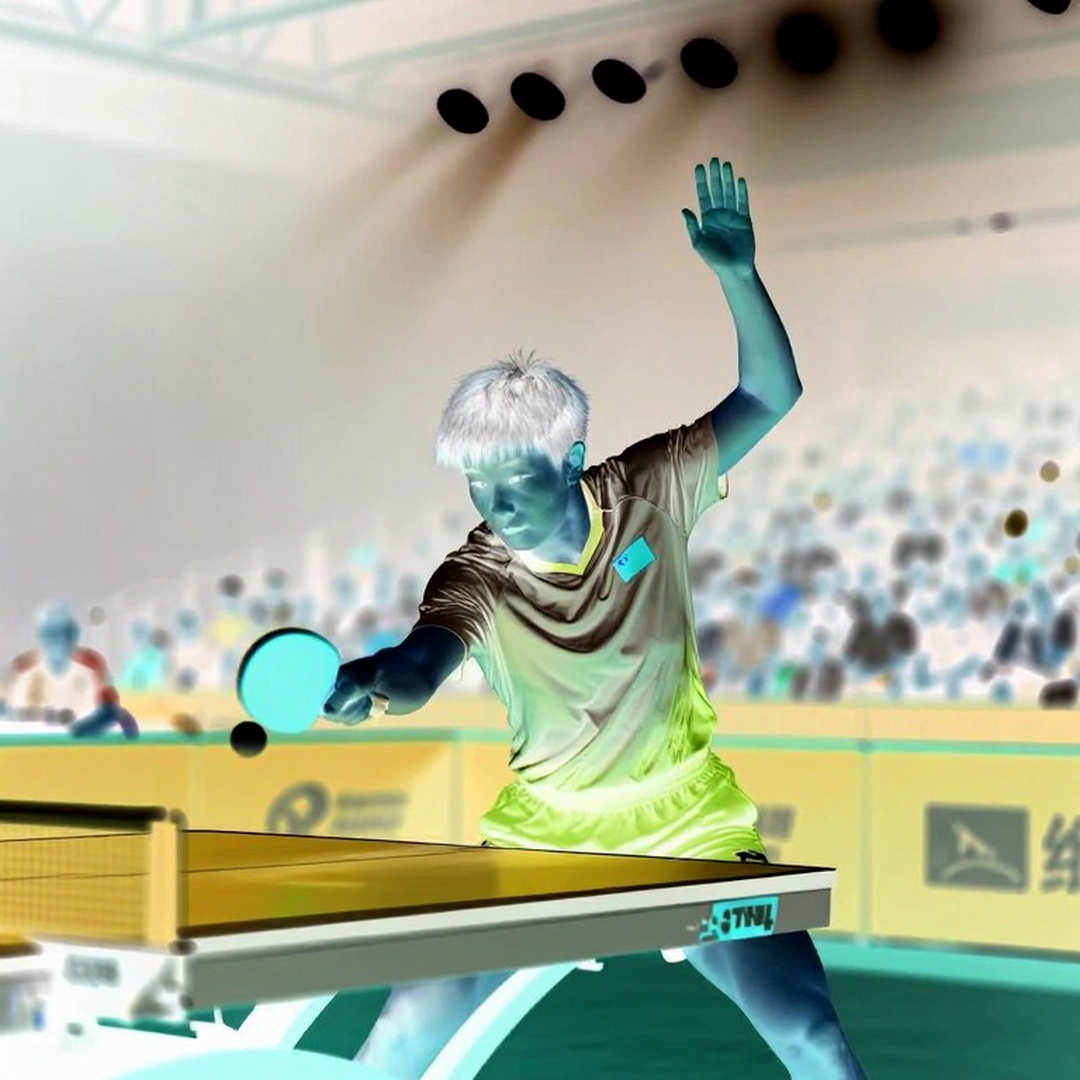
I have spent fifteen years watching this sport, from amateur tournaments in district gymnasiums to finals broadcast live across the globe. The longer I look, the more I believe table tennis is one of the most misunderstood sports. People think it is a game of reflexes, a race of hand speed, a light entertainment that can be played in any hall. But when you sit close enough to a top-level table, you realize that the true sound of this sport is not the roar of the stands. It is the thud of the ball on the rubber — a short, dry sound, almost swallowed by the vast space, yet carrying all the information about a decision.
And that decision is mostly made in the first three shots.
Context: How the System Redefined the Game
To understand why the first three shots matter so much, one must understand the framework within which professional table tennis now operates. Over roughly the past decade, the world of table tennis has undergone a deep restructuring: the WTT event system was established with a dense year-round calendar, a points system based on a rolling 52-week window, and constant pressure to appear at enough events to protect one's ranking. This changed the nature of being a professional. A player no longer only needs to peak at a few big events each year; they must maintain a pace of competition and a physical state almost year-round.
At the same time, the no-hidden-serve rule since 2026 forced the entire technical system to reshape. When the ball and racket could no longer be hidden behind the body, the receiver gained more time to read spin, and the server was forced to be subtler in the act of concealing information — not with a hand, but with the very ambiguity of the wrist and body. This is the source of a beautiful paradox: the more transparent the rules, the harder table tennis becomes to read technically.
The ball itself has changed too. From celluloid to plastic, then to a larger size, each adjustment slightly reduced spin and slowed the pace a little. These seemingly technical changes had enormous tactical consequences: they gradually eroded the advantage of patient defensive styles and empowered those who could attack early and finish quickly in close quarters. A whole generation of pimpled-rubber defenders who chopped from afar became heritage. The battle now happens in the first three shots, where the gap between winner and loser is measured in milliseconds of judgment and in millimetres of spin.
I have followed domestic and regional events for years, and what I noticed is a paradox in how we view Vietnamese table tennis. We have a broad grassroots base, players who grew up in small clubs, dedicated coaches. But we still see the first three shots as a secondary part of the match, while at the top level, it is the match. The biggest gap between a Vietnamese player and a top Asian player is not fitness, not willpower. It lies in the quality of the decision in the first two seconds of each point.
To see this clearly, one must go into each shot. One must dissect the moment I believe is the soul of this sport.
Core Analysis: Anatomy of the First Three Shots
In professional circles, the concept of the "first three shots" groups the serve, the receive, and the third-ball attack. This is the shortest phase of each point, yet it carries the highest decisive share of the outcome. At a high level, most points are settled within these three shots before the crowd even realizes what happened. A long, beautiful rally that people remember forever is often merely the consequence of the first three shots failing to end the point.
The Serve: The Art of Ambiguity
The serve is the only shot a player fully controls. In a sport where everything else is reaction, the serve is the moment of absolute power — and also the most exposed. The server faces a paradox: everything they do is seen by the opponent, yet they must hide the most important information, the type and direction of spin.
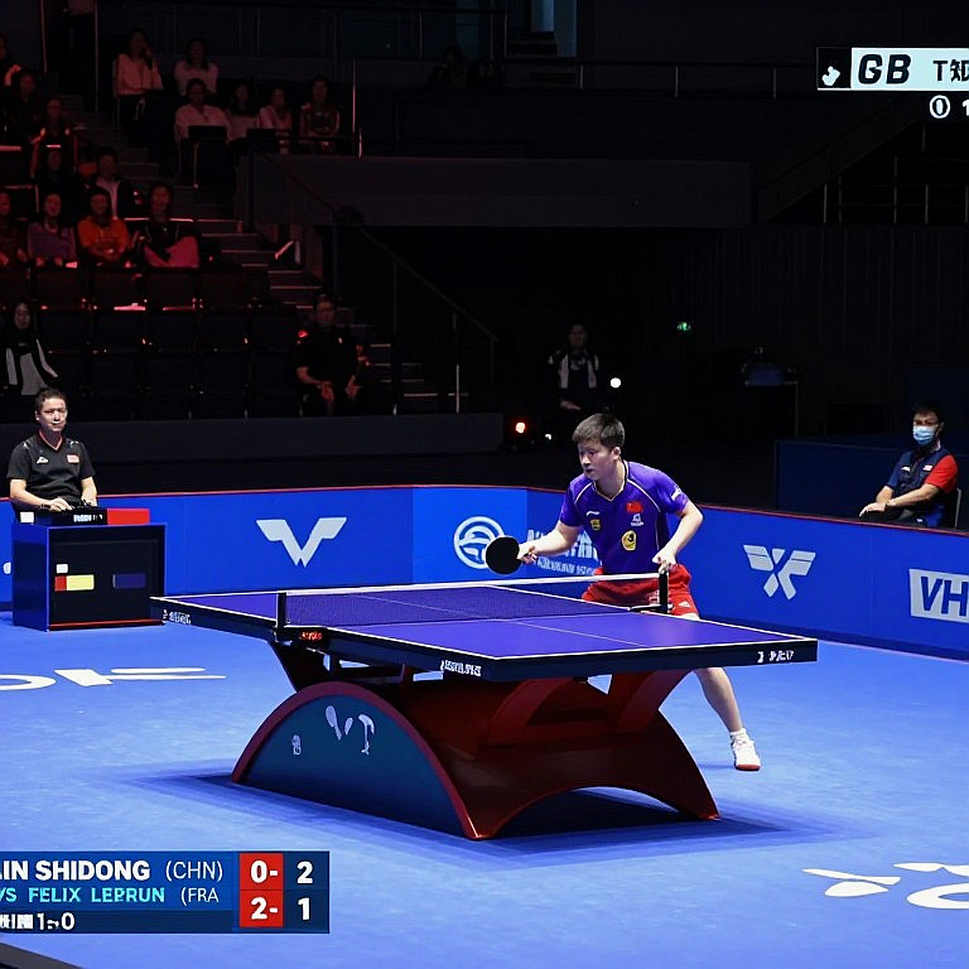
To understand this, we must dig into the physics of spin. A table tennis ball can carry topspin, backspin, sidespin left, sidespin right, or a combination. Each type of spin determines how the ball bounces off the table and how it bites into the receiver's rubber. A heavy backspin serve, when it bounces onto the opponent's side, slows slightly and pops up, forcing the receiver to lift the ball. A fast topspin serve dips and darts forward, forcing the receiver to press. If the receiver guesses the wrong spin, the ball either flies out or dives into the net — and the point ends without ever reaching the third-ball attack.
The elite server does not hide spin with a covering hand, but with uniformity. They train so that the same body movement, the same wrist swing, can produce different spins. The pendulum serve, the reverse pendulum, the tomahawk, the hook — all share a common outer shell, differing only in the final instant when the racket face contacts the ball. That instant lasts a fraction of a second, faster than the conscious analytical capacity of a human being. The receiver must rely on experience, on intuition, on micro-signals the naked eye struggles to catch.
That is why I always tell the young players I get to host: do not train the serve by repeating one movement. Train the serve by repeating one shell. What you need is not a perfect serve, but a collection of serves that look identical but are different in essence. Ambiguity is a weapon, and ambiguity demands stricter discipline than raw power.
At the Vietnamese level, I have seen many young players serve very fast but too readable. They serve to win points directly, not to set up a situation. That is a different philosophy, and it limits them to a certain ceiling. Against an equal opponent, a strong serve can win a point. But against a stronger opponent, a strong yet obvious serve will be punished immediately on the second shot.
The Receive: The Battle of Judgment
If the serve is power, the receive is intelligence. This is where the player is passive in position but active in decision. A good receiver does not merely return the ball; they send a message. By placing the ball in a specific corner, by choosing a specific spin, they are shaping the opponent's third-ball attack — or breaking it.
There are several basic receive options. The push is the safest, keeping the old spin and placing the ball slowly on the opponent's half, waiting for a mistake. The flick is the attacking option, turning a short serve into an immediate attack. In recent years, the backhand wrist flick, often called the banana flick, has become one of the most popular weapons at the top level. It allows the receiver to actively open the attack from the second shot, completely reversing the situation.
But the banana flick is not the answer to everything. It is a high-risk option, demanding precise timing and delicate touch. A player who overuses it will be read and counterattacked. The brilliance of a top receiver lies in the ability to mix options: push, flick, fake push then flick, so the opponent never knows what is coming. Diversity in the receive is the first defensive wall.
I once watched a match in which our young Vietnamese player lost simply because he received in only one way. For three sets, he kept pushing the ball back, never daring to flick, never daring to change the rhythm. The opponent only had to serve short backspin and wait for the third-ball attack. He defended stubbornly, saving many difficult balls, but in the end he still lost because he never seized the initiative. That is a miniature portrait of a technical gap: knowing how to receive, but not how to receive in order to attack.
The Third-Ball Attack: The Moment of Judgment
The third shot is where the serve and the receive are brought to trial. The server has created a situation, the receiver has replied, and now the server — with an established advantage — has a chance to finish. The third-ball attack is the most carefully prepared shot in the entire match, because it is the direct consequence of a decision the player made themselves.
Here, spin types are exploited to the utmost. A heavy topspin loop from a backspin serve will arc high, sink deep toward the end of the table, and pop up off the opponent's side, very hard to block. A fast, low-spin loop dips straight and low, forcing the opponent to react in an instant. The choice between the two depends on the opponent's position, the quality of the return, and the mental state of the attacker.
There is a detail I particularly love in the third-ball attack: it forces the player to combine foot speed with hand precision in an extremely short window. After serving, the player is often in a slightly awkward stance, not yet ready for a large movement. They must gather their feet, rotate their hips, and unleash the shot within about two seconds. Players with good footwork exploit this advantage fully; slower players are forced to serve more safely, and thus lose their weapon.
I remember a remark from a coach I once interviewed. He said that to judge a young player, he does not look at the rallies. He looks at the third-ball attack after a short serve. If the player can move into the table, loop or smash actively, they have a future. If they hesitate, stall, or simply push the ball over, then no matter how good their basics, they will be limited. The first three shots are not merely technique; they are a mirror of character.
The Structure of Dominance and the Nature of the Gap
When these three shots are combined into a system, we begin to see why certain nations and certain players have dominated this sport for so long. Dominance does not come from a single technique. It comes from a synchronized ecosystem: a training school that produces players whose first three shots are terrifyingly complete, a fiercely competitive internal system where every internal match is harder than an international one, and a selection philosophy that constantly renews generations.
At the deepest level, what creates the gap is the quality of the decision. When the first three shots are trained to automation, the player no longer needs to think about technique. They can use all their mental energy to read the opponent, to change rhythm, to exploit every tiny crack. That is why top players seem to play slowly, calmly, while their opponents struggle with every shot. That calm is not laziness; it is the sign of a system engraved into the bone.
Conversely, a developing table tennis nation tends to focus on showcase technique. Young players are taught beautiful strokes, long rallies, impressive-looking shots. But when they step into elite competition, those beautiful strokes are not enough to win. The opponent serves unpredictably, receives actively, and attacks the third ball decisively. The match ends before the beautiful rallies have a chance to appear.
In Vietnam, we have talented players, players with strong will and admirable fighting spirit. But I believe that if we want to truly close the gap, we must change the way we teach the first three shots. They must become the centre of the training process, not the ignored opening to rush toward more exciting parts. The winner in modern table tennis is not the one with the most beautiful stroke, but the one who controls the first eight seconds of each point.
Contrarian Angle: Specialization or Diversity?
At this point, there is a question I always debate with colleagues and table tennis lovers. Is what creates success at the top absolute specialization into one style, or flexible diversity among many options?
The answer seems obviously to be diversity. But looking at reality, most dominant players build their careers on a very narrow system. They almost only play one style. The modern two-winged attacker almost never retreats to defend from afar. Some choppers stake their lives on their defensive style. This extreme specialization creates a weapon that diversity cannot match: the ability to execute a technique at an almost unbelievable level of perfection.
But reading more carefully, we see that this specialization operates within an extremely diverse first-three-shots system. A player may have only one overall style, but in the serving moment, they have dozens of variations. A single macro-level style, accompanied by many diverse micro-layers. That is the true structure of dominance.
There is a paradox here I want to point out. Diversity of technique at the macro level is often mistaken for a lack of specialization. A player who can attack and also defend, who plays offense today and defence tomorrow, is often undervalued compared to a player who does one thing but does it extremely well. But at the macro level, that diversity is a confusion, while at the micro level, diversity within the first three shots is strength. This is what many fans miss: they cheer for diversity in a vague way, when what they really need to cheer for is organized diversity, diversity within a clear structure.
In Vietnamese table tennis, I often see two extremes. One extreme is chasing beautiful play, imitating the rallies of stars on television, then blaming a lack of fitness when they fail. The other extreme clings to a safe style, pushing the ball back and forth, waiting for the opponent's mistake, and never improving. Both extremes ignore the core: the first three shots are where free creativity meets the strictest discipline. It is not an opposition between art and science. It is a unification.
Every player is a universe of their own. I have said this many times, and I believe it more deeply than ever when speaking of the first three shots. Because in that moment, no two players are alike. Each has their own way of reading spin, a rhythm, a fear, a private desire. The sports writer can only borrow their eyes to see the match, never impose a universal formula on all.
Once, I sat on the sidelines of a tournament and heard two coaches argue about whether to let a young player switch to a purely offensive style. One said yes, because that is the trend. The other said no, because that player has good defensive feel. The debate had no conclusion, but it showed something important: there is no single right path. What is right lies in building a first-three-shots system suited to that player, not imitating anyone.
Looking Ahead
There is an article I once let be forgotten, posted on a personal blog years ago, when I was a student writing for twelve readers. Today, I think about that article more often than I would have guessed. Because it taught me something I still carry: a forgotten article and a match with no crowd — both wait for a reader to return. Vietnamese table tennis is in that waiting moment. We have all the necessary material: people, passion, and young players full of desire. What is missing is a system that nurtures the first three shots with discipline and depth.
I do not believe in miraculous breakthroughs. At thirty-one, I no longer believe in comebacks; I believe in continuation. Vietnamese table tennis does not need a miracle to reach out to the continent. It needs a persistent process, where each generation of young players is taught how to control the first eight seconds of each point, how to serve to create ambiguity, how to receive to seize the initiative, and how to attack the third ball to end the point before the opponent understands what happened.
When I wrote for no one to read, I learned to love the game without applause. And that is perhaps the greatest lesson for anyone who wants to take Vietnamese table tennis far. True success does not come from hollow ovations, but from a persistent love for a sport that demands precision down to the millimetre. Every first shot, however small, is a choice carrying an entire story. And the story of Vietnamese table tennis, at this moment, is still waiting to be written on with shots the home crowd has never seen — but deserves to.